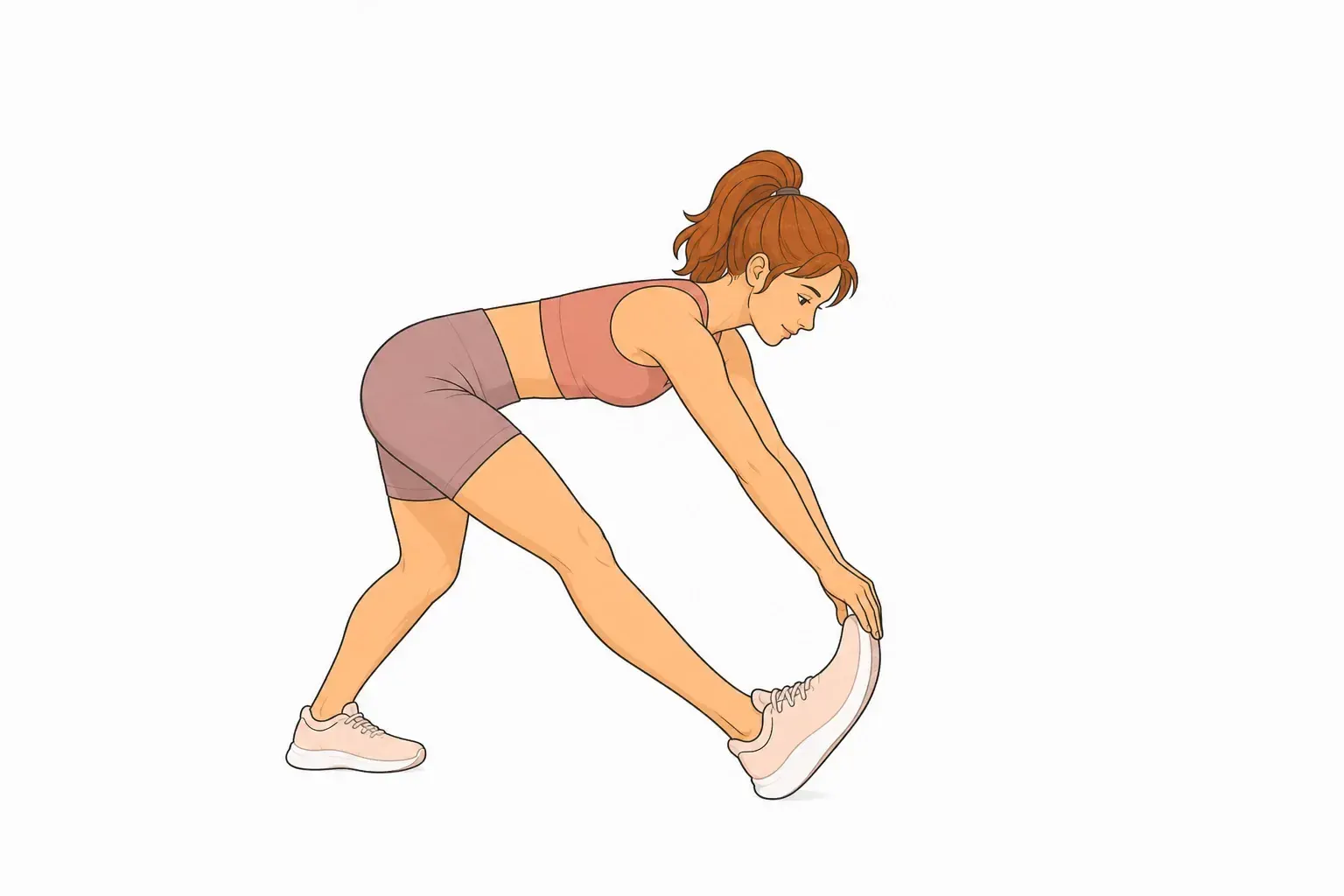

Hamstring Stretch with Foot Flexion is an intermediate lower body exercise you can do with no equipment. Below is the full movement, step by step, with the form cues and common mistakes that matter most.
At a glance
| Body area | Lower body |
|---|---|
| Difficulty | Intermediate |
| Equipment | None — bodyweight only |
| Main muscles | Hamstrings, gastrocnemius and tibialis anterior |
| Movement pattern | Hinge, stretch and isometric |
| Steps | 3 |
Muscles worked
The work lands mainly on your hamstrings, with your gastrocnemius and tibialis anterior taking a share of it. If one of those areas is already sore, move Hamstring Stretch with Foot Flexion to another day.
The pattern here is hinge, stretch and isometric. Follow it with a squat in the same session and the workout stays balanced.
For true mobility, stretch hamstrings under resistance. Flex foot up as much as possible during stretch. This builds strength in the range of motion, making flexibility more functional and useful.
How to do it
Step 1
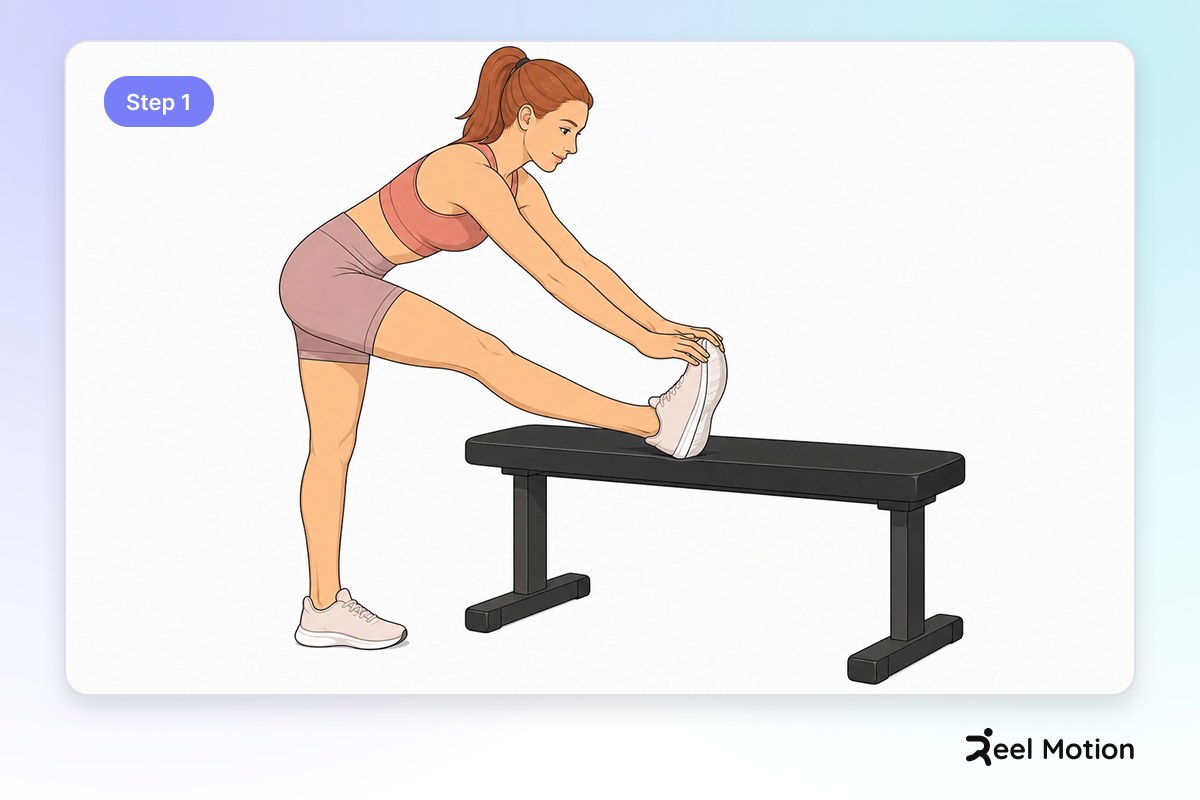
Stand with feet hip-width apart, then hinge forward at your hips while keeping your back straight and your knees locked out.
Step 2
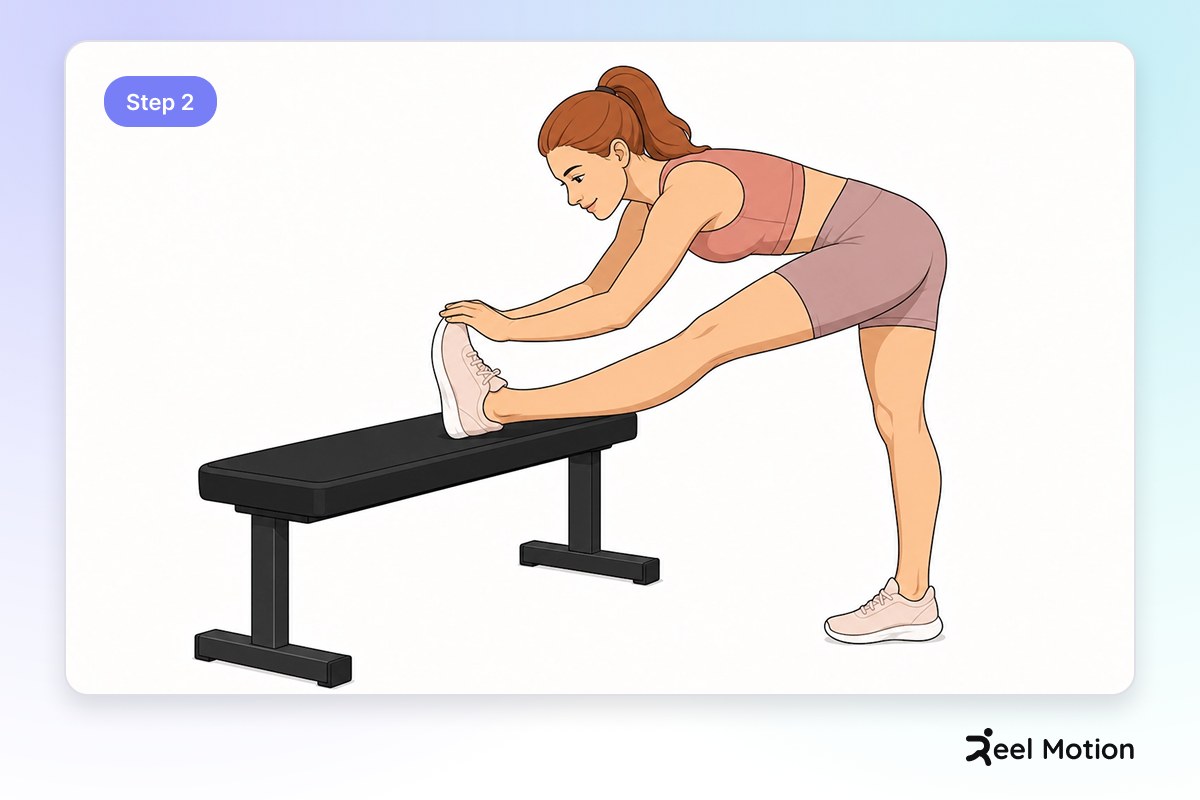
Flex your feet upward as much as possible, pulling your toes toward your shins to intensify the hamstring engagement.
Step 3
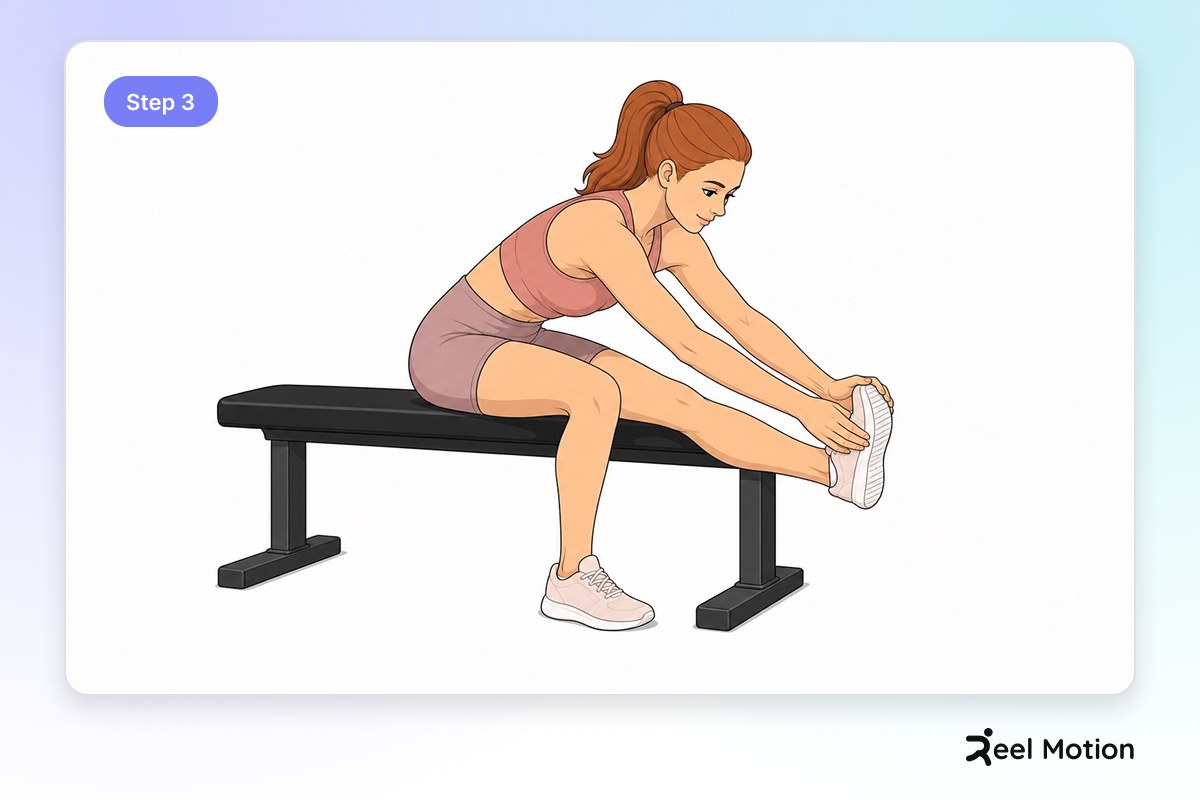
Hold this position with your feet flexed, feeling the stretch along the back of your legs, then slowly return to standing.
Form cues
- Tilt your pelvis forward
- Lock out your lower back
- Lock out your knees
- Keep your back straight
- Flex your feet maximally
- Pull your toes toward your shins
- Maintain the forward hinge
- Maintain foot flexion
- Control your return to standing
Common mistakes
Rounding your spine. Keep your back straight and hinge from the hips.
Bending your knees. Lock your knees fully to engage the hamstring.
Tilting pelvis backward. Tilt your pelvis forward to deepen the stretch.
Pointing your toes downward. Actively flex your feet upward to build strength in the range.
Relaxing foot tension. Keep your toes pulled toward your shins throughout.
Losing the forward hinge. Hold the hinge position while flexing your feet.
Releasing foot flexion early. Keep your feet flexed until you return to standing.
Rounding your spine on return. Hinge back up from your hips with a straight back.
Jerky movements. Move with control and steady rhythm.
Breathing
- Breathe steadily throughout the stretch.
- Exhale as you return to standing.
How to program it
Reel Motion starts you at 3 sets of 10, with 1 min of rest in between, which comes to about 12 sec in total. Add sets before you add reps, and reps before you shorten the rest.
| Sets | 3 |
|---|---|
| Reps per set | 10 |
| Rest between sets | 1 min |
| Total time | about 12 sec |
Safety
- Do not bounce or force the stretch
- Stop if you feel sharp pain in your lower back
Where it fits in your training
If Hamstring Stretch with Foot Flexion is more than you can hold form on right now, build up with Single Leg Standing Hamstring Stretch first.
Related exercises
More lower body movements in the Reel Motion library:
- Standing Forward Fold with Pelvic Tilt — beginner
- Hamstring Stretch — beginner
- Lumbar Rotation Stretch — beginner
- Piriformis Stretch — beginner