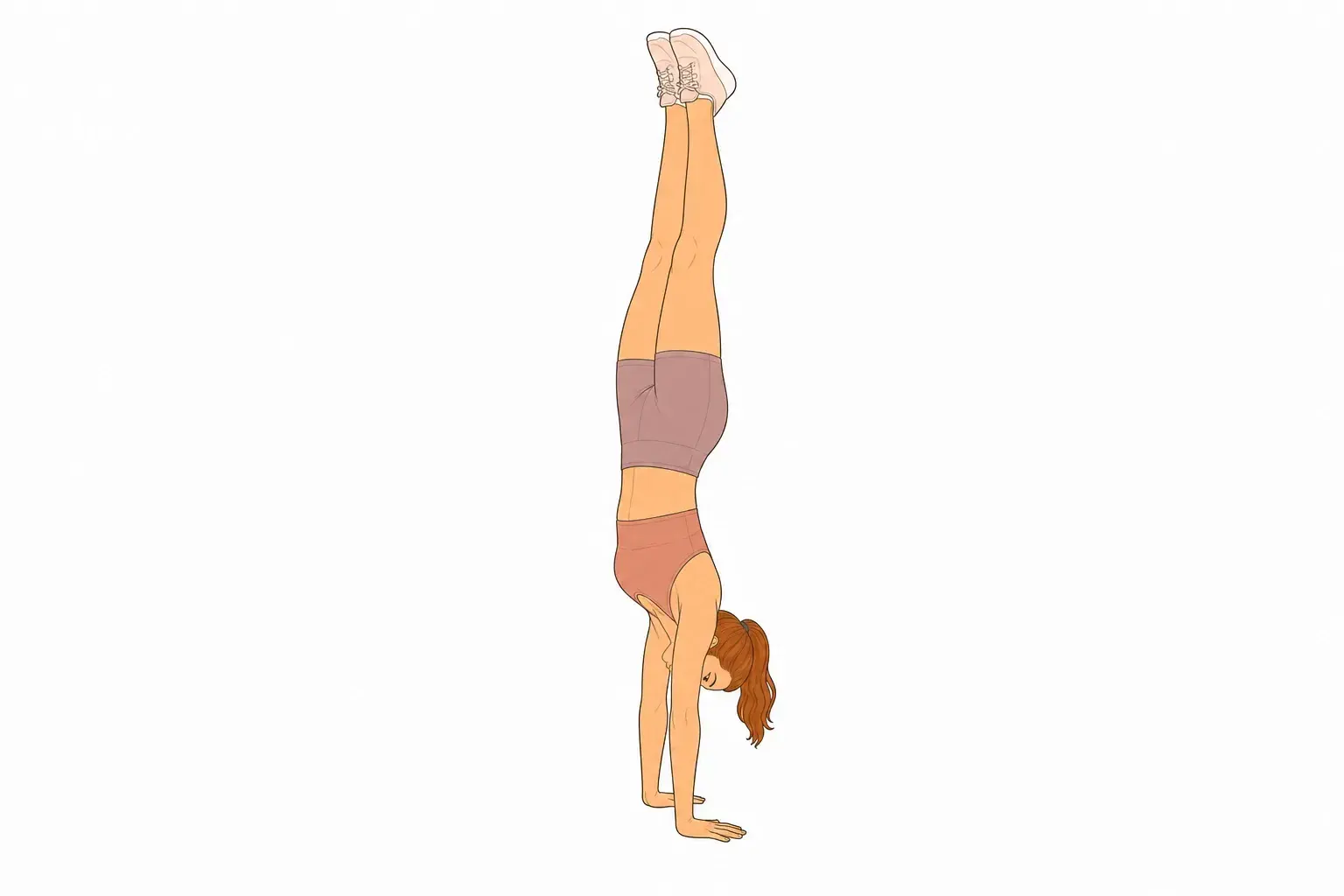

Handstand is an advanced upper body exercise you can do with no equipment. Below is the full movement, step by step, with the form cues and common mistakes that matter most.
At a glance
| Body area | Upper body |
|---|---|
| Difficulty | Advanced |
| Equipment | None — bodyweight only |
| Main muscles | Shoulders and triceps |
| Movement pattern | Isometric |
| Steps | 3 |
Muscles worked
The work lands mainly on your shoulders, with your triceps taking a share of it. That mix is what makes Handstand worth keeping in a rotation rather than doing it once and forgetting it.
The pattern here is isometric. Follow it with a moving exercise in the same session and the workout stays balanced.
How to do it
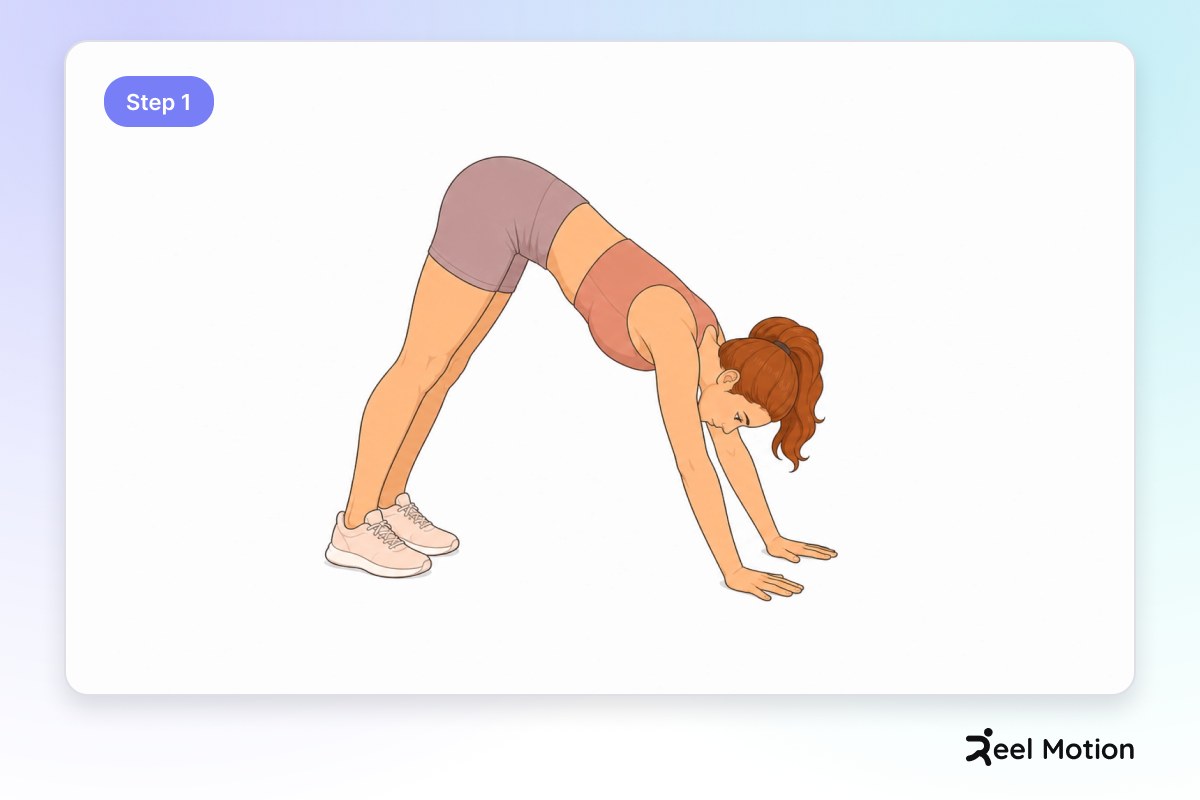
Step 1
Place both palms flat on the floor about shoulder-width apart with fingers spread wide.
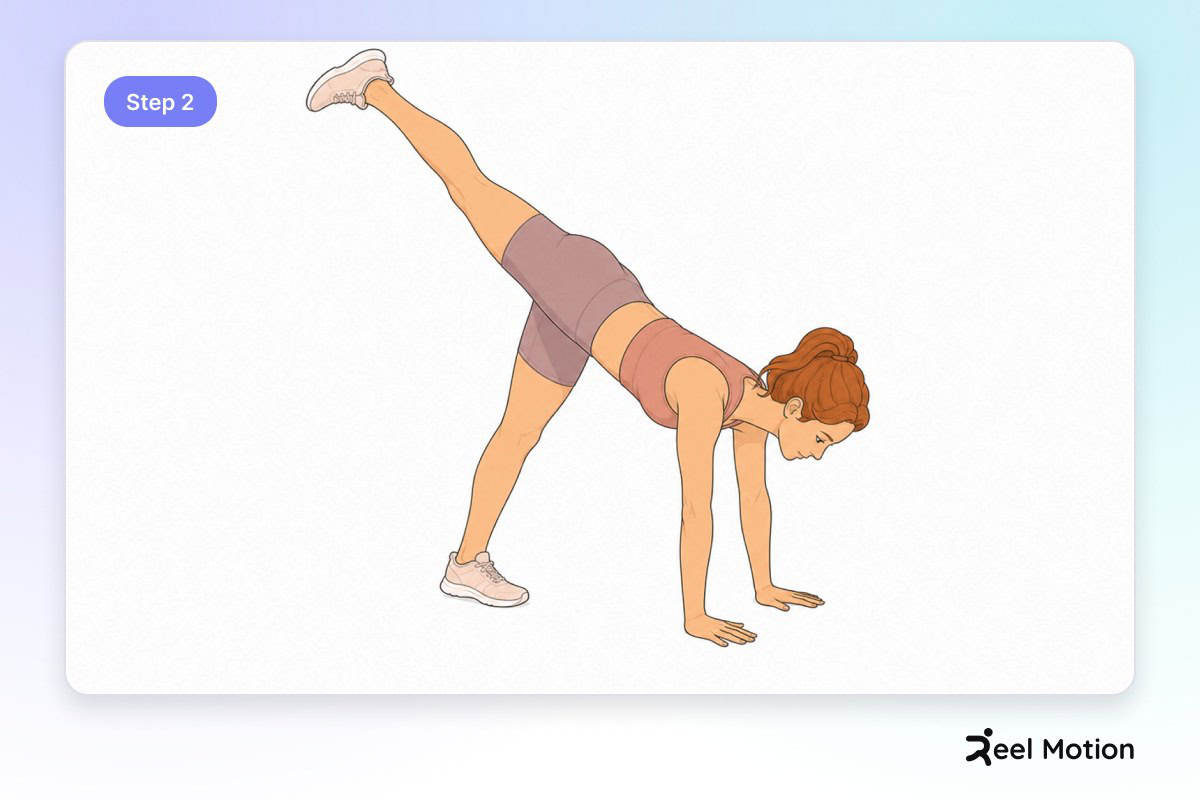
Step 2
Step one foot in close to your hands and swing the other leg high behind you, pushing through the floor to drive your hips up over your shoulders.
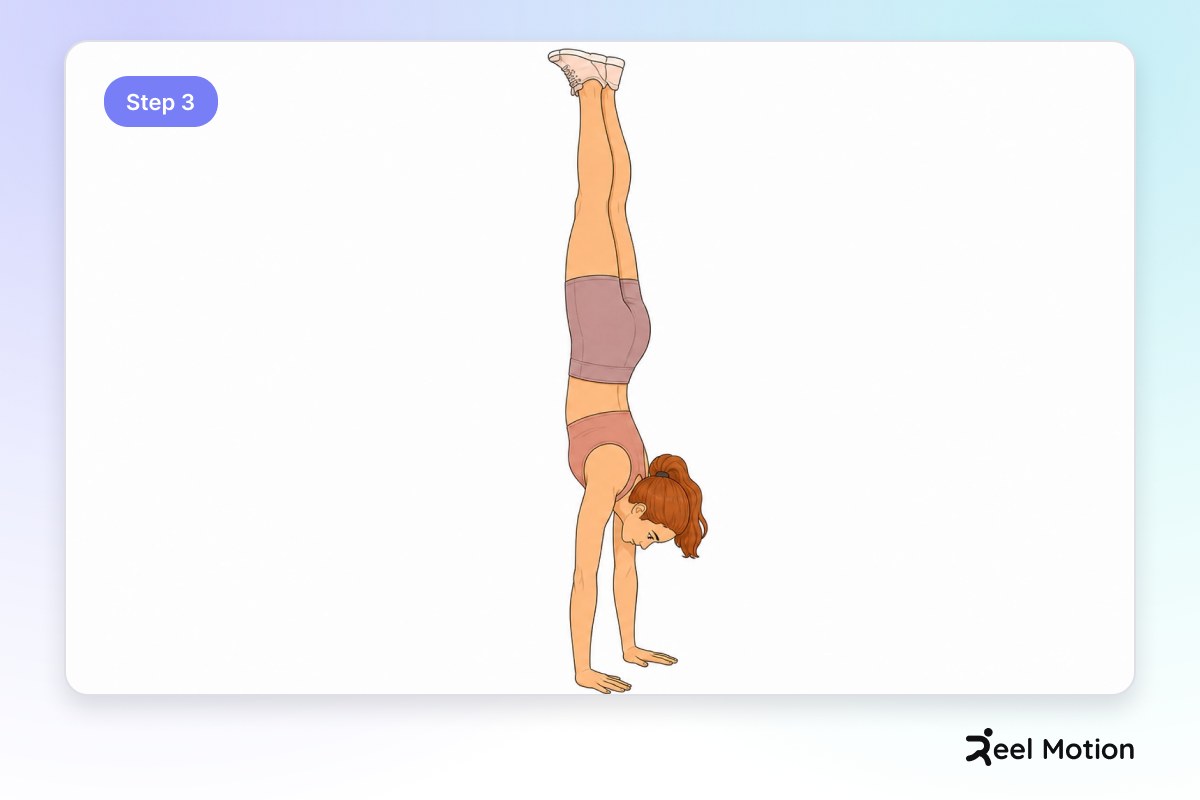
Step 3
Hold the balanced position with straight arms, engaged core, and legs squeezed together, facing a wall for support.
Form cues
- Palms flat on floor
- Hands shoulder-width apart
- Fingers spread wide
- Shoulders stacked over wrists
- Keep arms straight throughout
- Press the floor away through both palms
- Swing the leg, do not jump off both feet
- Hips travel up over the shoulders
- Gaze slightly forward of the hands
- Arms remain straight and strong
- Core engaged and ribs drawn in
- Legs pressed together
- Toes pointed upward
- Shoulders packed and stable
- Wall within arm's reach for safety
Common mistakes
Hands too close together. Move hands to shoulder-width distance.
Fingers bunched or curled. Spread all fingers apart for stability.
Shoulders in front of wrists. Stack shoulders directly above wrists.
Bending elbows during the swing. Lock elbows straight and maintain tension.
Ribs flaring out. Draw belly button toward spine.
Legs separating or splaying. Press legs together and point toes.
Arching the lower back. Engage core to prevent arch.
Shoulders collapsing forward. Keep shoulders packed over wrists.
Bending elbows. Press through palms and lock elbows.
Relaxing the core. Maintain abdominal tension throughout.
Legs drifting apart. Squeeze inner thighs and glutes.
Shoulders rolling forward. Keep shoulders stacked over wrists.
Practicing away from a wall as a beginner. Always use a wall for balance and safety.
Breathing
- Exhale as you swing your legs up.
- Breathe steadily and calmly; avoid holding your breath.
How to program it
Reel Motion starts you at 4 sets of 15 sec, with 1 min 30 sec of rest in between, which comes to about 5 min 30 sec in total. Change the numbers before you change the technique.
| Sets | 4 |
|---|---|
| Time per set | 15 sec |
| Rest between sets | 1 min 30 sec |
| Total time | about 5 min 30 sec |
Safety
- Practice near a wall for support and safety
- Ensure the floor is clear of obstacles
- Use a yoga mat or padded surface to protect wrists
- Build momentum with a controlled swing, not a jump
- If you feel unstable, step down with control rather than falling
- Do not attempt to hold a handstand away from a wall until you have developed significant strength and balance
- If balance is lost, step one foot down to the wall or floor with control
Where it fits in your training
For a change at the same level, swap in Planche Leans.
Related exercises
More upper body movements in the Reel Motion library:
- Archer Push-Up — intermediate
- Decline Push-Up — beginner
- Dips – Triceps Version — beginner
- Full Pushup — intermediate