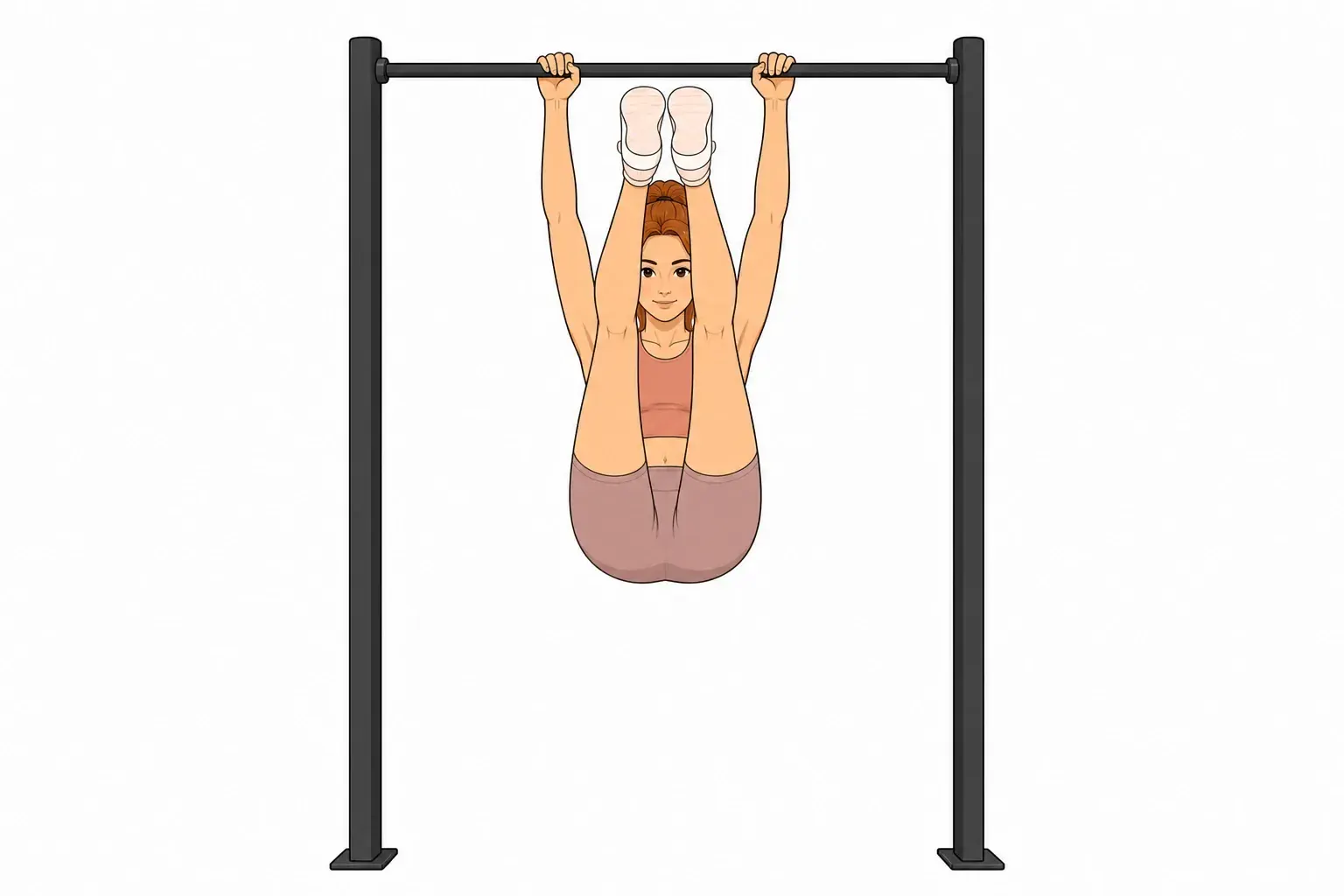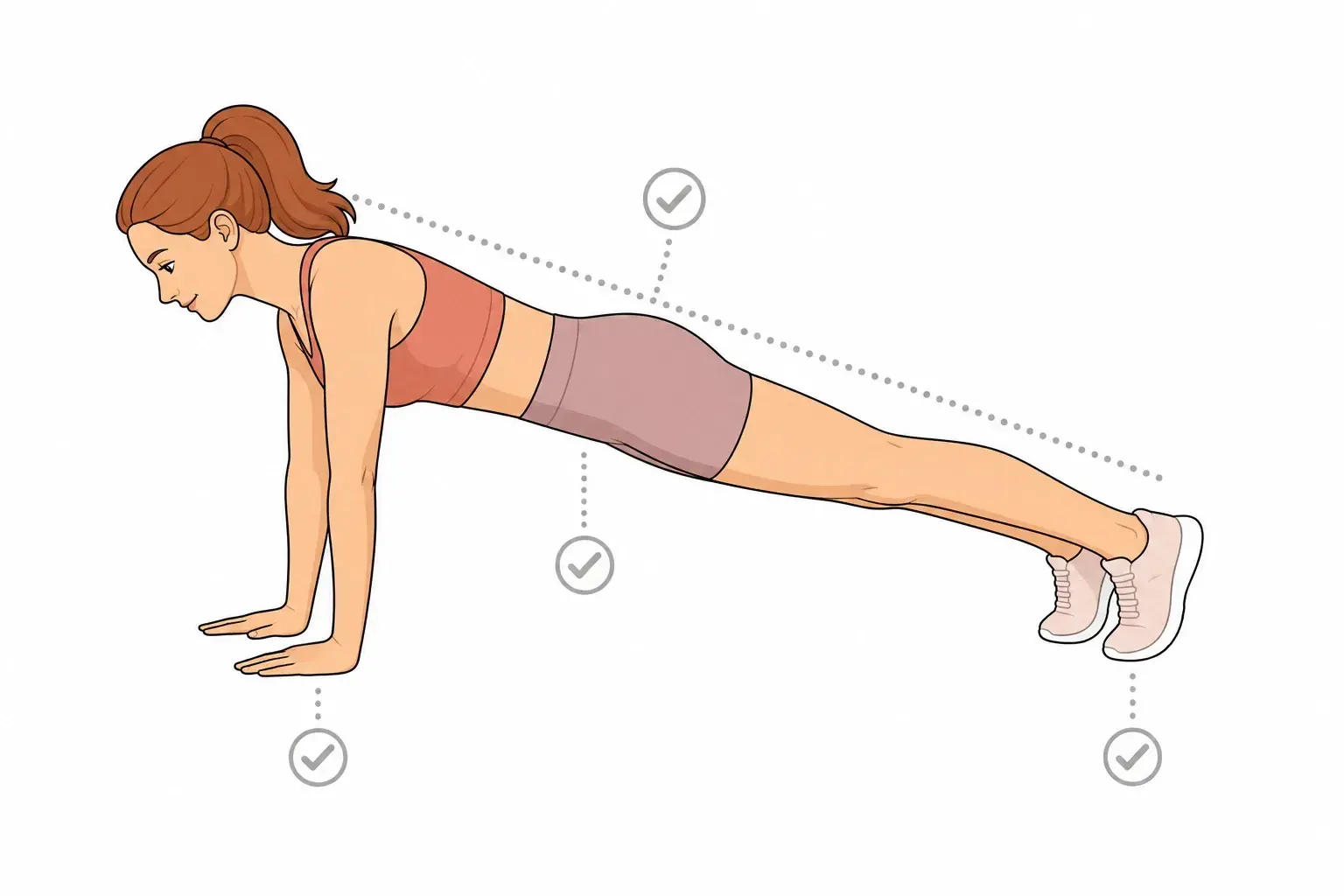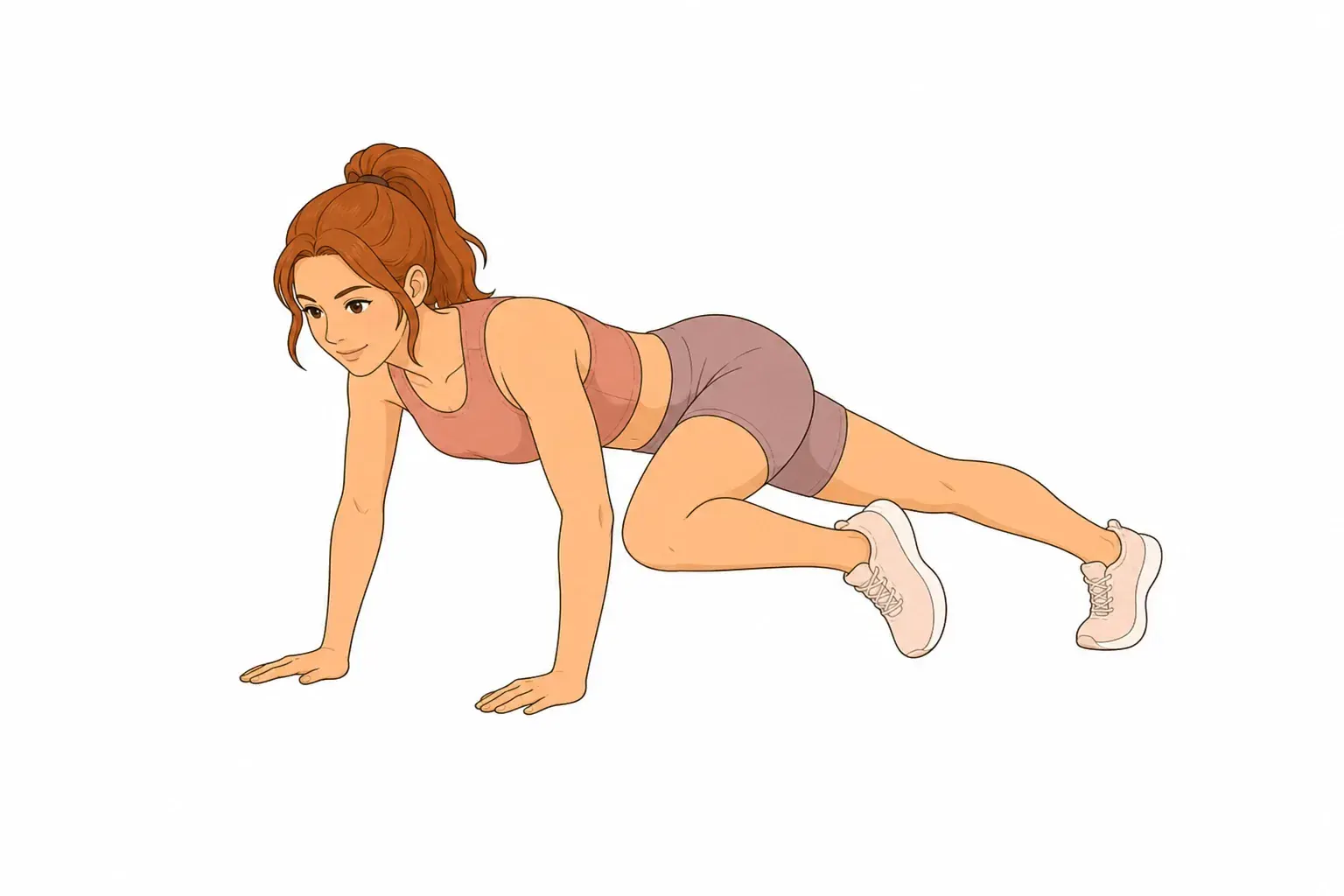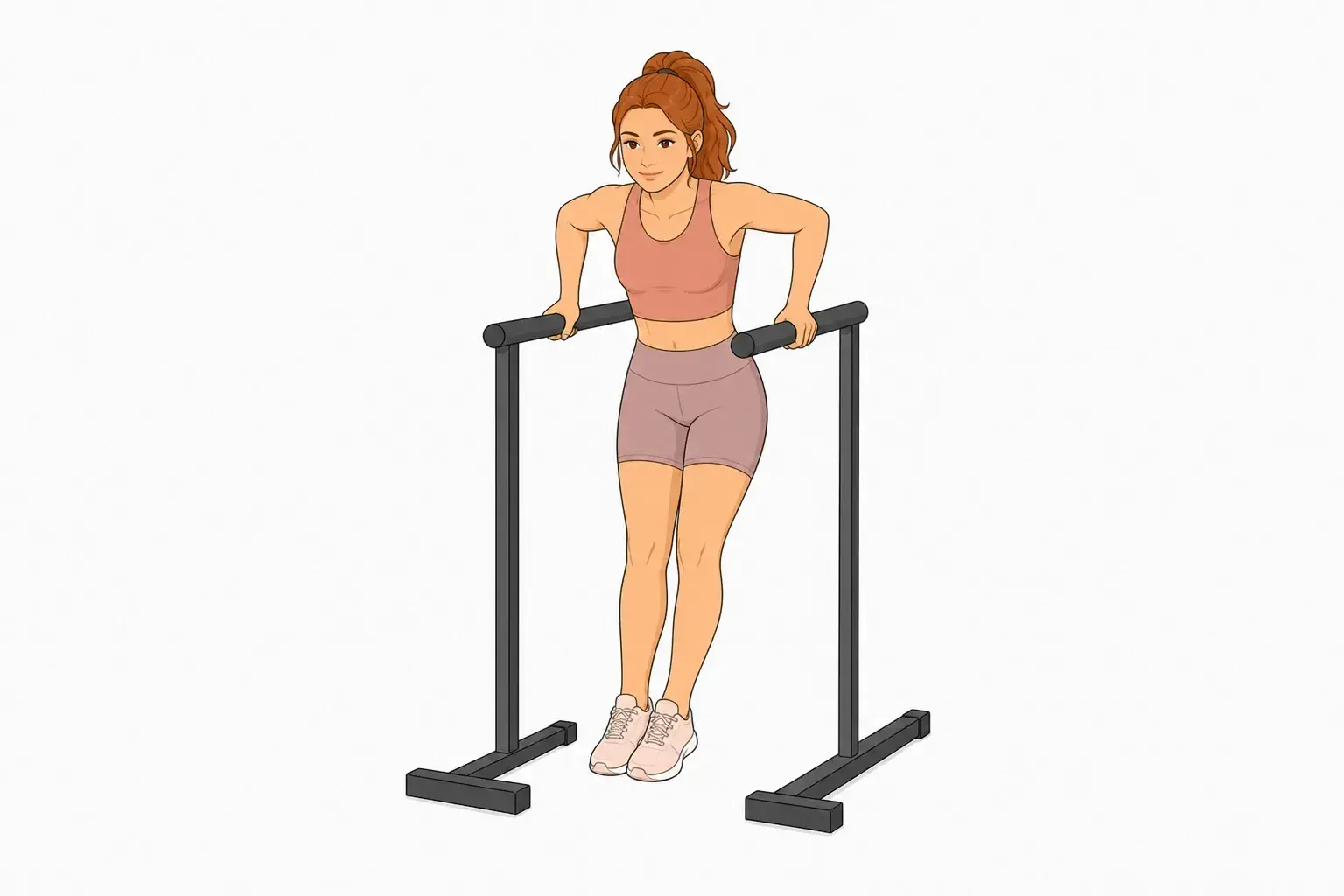

Parallel Bar Dip is a beginner upper body exercise you can do with no equipment. Below is the full movement, step by step, with the form cues and common mistakes that matter most.
At a glance
| Body area | Upper body |
|---|---|
| Difficulty | Beginner |
| Equipment | None — bodyweight only |
| Main muscles | Triceps, chest and shoulders |
| Movement pattern | Push |
| Steps | 2 |
Muscles worked
The work lands mainly on your triceps, with your chest and shoulders taking a share of it. That mix is what makes Parallel Bar Dip worth keeping in a rotation rather than doing it once and forgetting it.
The pattern here is push. Follow it with a pulling movement in the same session and the workout stays balanced.
How to do it
Step 1
Stand between the parallel bars, place one hand on each bar, and take a small jump to lift yourself into the starting position with your arms fully extended.

Step 2
Bend your elbows and lower your body in a controlled manner until your arms break 90 degrees, keeping your chest upright and avoiding any swinging motion.

Form cues
- Arms fully extended at the top
- Shoulders stable and engaged
- Chest upright
- Elbows track close to your body
- Chest stays upright
- Core engaged throughout
- Controlled descent with no momentum
- Full elbow extension at the top
- Shoulders stable and down
- Controlled, steady pressing motion
Common mistakes
Jumping too high or losing control on landing. Use a controlled jump just high enough to clear the bars and settle into position.
Shoulders shrugging toward ears. Keep shoulders down and back, away from your ears.
Leaning too far forward at the start. Maintain an upright torso with a slight forward lean from the hips.
Swinging the body or using momentum. Move with steady, deliberate control; pause briefly at the bottom if needed.
Elbows flaring out to the sides. Keep elbows tucked close to your ribs, not splayed outward.
Rounding the shoulders or collapsing the chest. Maintain an upright posture; engage your core to prevent slouching.
Descending too quickly. Take 2–3 seconds to lower, focusing on the muscle working rather than speed.
Pressing unevenly or favoring one side. Press evenly through both hands; use your core to stay centered.
Shrugging shoulders at the top. Keep shoulders down and back as you reach the top.
Rushing the ascent. Take 1–2 seconds to press up; avoid explosive or jerky movements.
Incomplete elbow extension. Fully straighten your elbows without hyperextending.
Breathing
- Inhale as you prepare to jump.
- Inhale as you lower your body.
How to program it
Reel Motion starts you at 3 sets of 10, with 1 min of rest in between, which comes to about 3 min 30 sec in total. Change the numbers before you change the technique.
| Sets | 3 |
|---|---|
| Reps per set | 10 |
| Rest between sets | 1 min |
| Total time | about 3 min 30 sec |
Safety
- Ensure the bars are stable and secure before attempting
- Use a spotter or practice near a wall if you are new to this movement
- Do not jump so high that you lose control of your grip
- Do not descend so far that your shoulders roll forward or your grip becomes unstable
- Stop if you feel sharp pain in the shoulders or elbows
- Do not lock your elbows so hard that you hyperextend the joint
- Maintain a firm grip on both bars throughout the ascent
Where it fits in your training
Once the last set still looks clean, Archer Push-Up is the next step up in the same pattern. For a change at the same level, swap in Decline Push-Up.
Related exercises
More upper body movements in the Reel Motion library:
- Dips – Triceps Version — beginner
- Full Pushup — intermediate
- Incline Push-Up — beginner
- Kneeling Pushups — intermediate