
Pike Push-ups is an intermediate upper body exercise you can do with no equipment. Below is the full movement, step by step, with the form cues and common mistakes that matter most.
At a glance
| Body area | Upper body |
|---|---|
| Difficulty | Intermediate |
| Equipment | None — bodyweight only |
| Main muscles | Deltoids, shoulders, triceps and upper chest |
| Movement pattern | Push |
| Steps | 3 |
Muscles worked
The work lands mainly on your deltoids, with your shoulders, triceps and upper chest taking a share of it. Knowing which muscle does most of the work tells you where you will feel it the next day.
The pattern here is push. Follow it with a pulling movement in the same session and the workout stays balanced.
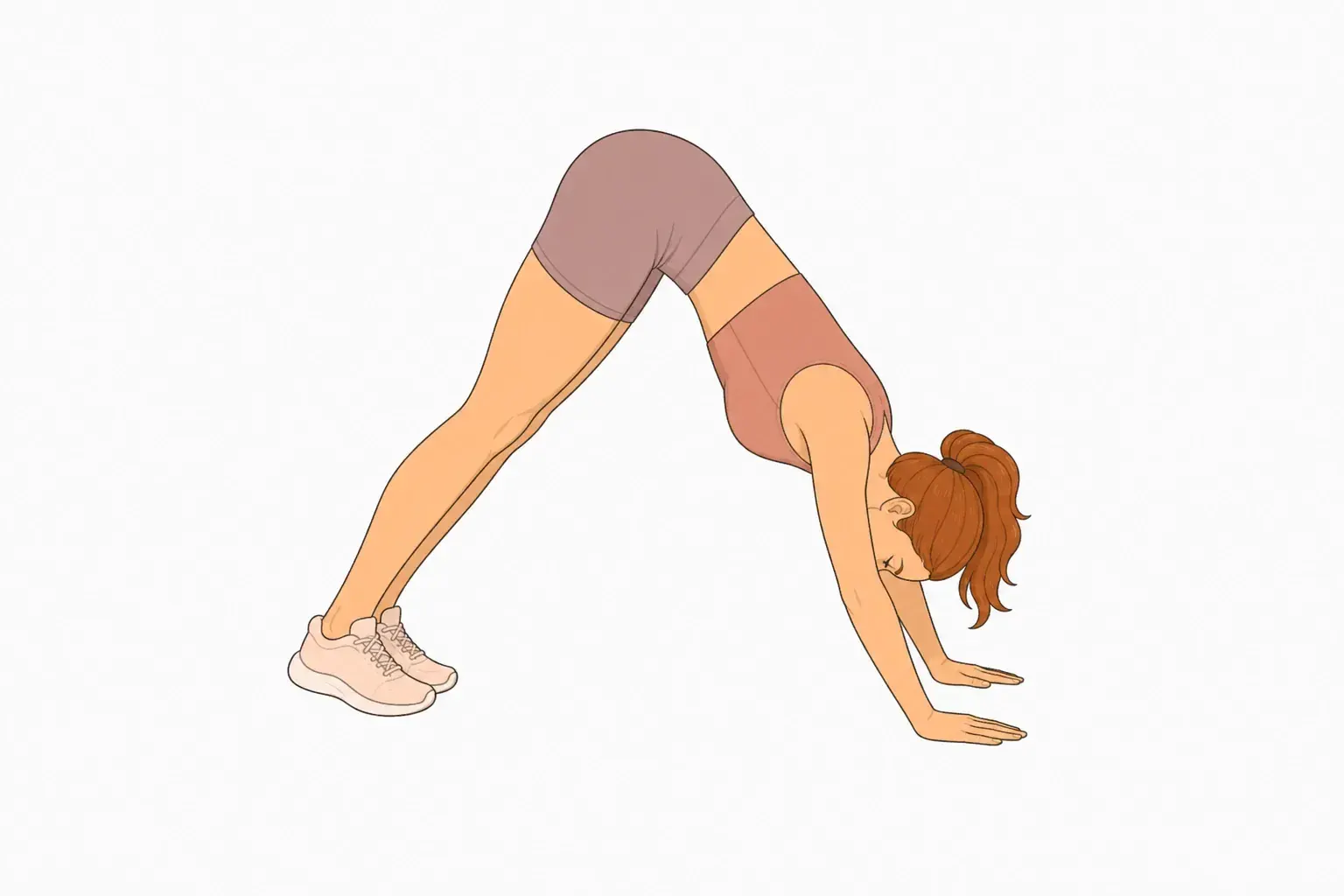
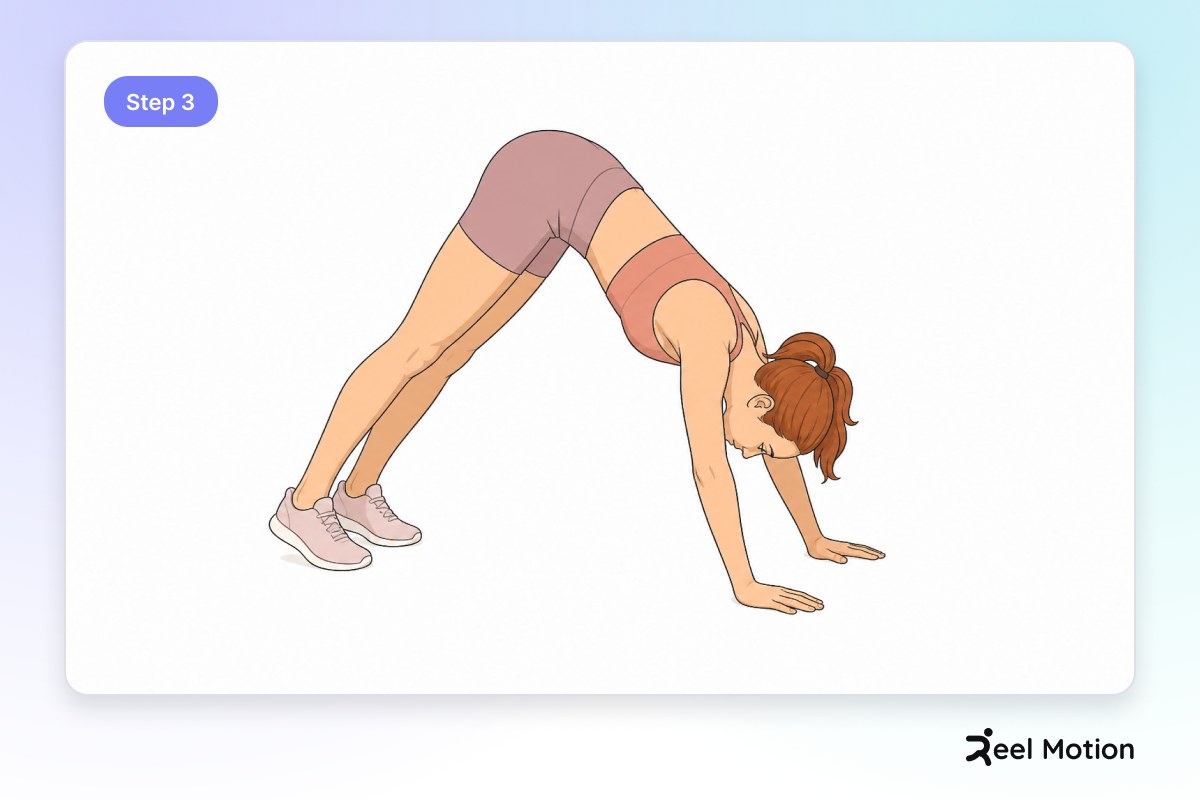
Form a downward dog position with hips high, then lower your head toward the ground by bending elbows. This targets overall shoulder development.
How to do it
Step 1
Start in a downward dog position with your hands shoulder-width apart on the floor, hips pushed high toward the ceiling, and your head in a neutral position between your hands.

Step 2
Bend your elbows and lower the top of your head toward the floor in a controlled motion, keeping your hips high and core tight throughout the descent.

Step 3
Press through your hands to straighten your elbows and return to the starting downward dog position, maintaining high hips and a strong core.
Form cues
- Hips pushed high toward ceiling
- Hands shoulder-width apart
- Head neutral between hands
- Core engaged
- Elbows bend in a controlled manner
- Hips remain high
- Core stays engaged
- Shoulders active
- Elbows fully extend
- Hips return to high position
- Core remains engaged
- Shoulders stable
Common mistakes
Hips sagging low. Press hips higher toward the ceiling.
Elbows flaring wide. Keep elbows tracking close to your body.
Head jutting forward. Keep your head in line with your spine.
Hips dropping as you lower. Keep hips pressed upward throughout the movement.
Elbows flaring outward. Drive elbows down and back, not out to the sides.
Lowering too quickly. Move with steady, deliberate control.
Incomplete elbow extension. Fully straighten your elbows at the top.
Hips sagging during the press. Drive hips back up as you press.
Rushing the return. Control the movement throughout.
Breathing
- Inhale as you prepare.
- Exhale as you lower.
- Inhale as you press up.
How to program it
Reel Motion starts you at 3 sets of 10, with 1 min of rest in between, which comes to about 3 min 30 sec in total. If the last rep of a set looks nothing like the first, drop the reps rather than pushing through.
| Sets | 3 |
|---|---|
| Reps per set | 10 |
| Rest between sets | 1 min |
| Total time | about 3 min 30 sec |
Safety
- Ensure wrists are stable and comfortable; modify hand position if needed
- Stop before your head makes contact with the floor if you are a beginner
Where it fits in your training
If Pike Push-ups is more than you can hold form on right now, build up with Decline Push-Up first. Once the last set still looks clean, Handstand Push-Ups is the next step up in the same pattern. For a change at the same level, swap in Archer Push-Up.
Related exercises
More upper body movements in the Reel Motion library:
- Dips – Triceps Version — beginner
- Full Pushup — intermediate
- Incline Push-Up — beginner
- Kneeling Pushups — intermediate