
Plank with Arm Bends is an intermediate upper body exercise you can do with no equipment. Below is the full movement, step by step, with the form cues and common mistakes that matter most.
At a glance
| Body area | Upper body |
|---|---|
| Difficulty | Intermediate |
| Equipment | None — bodyweight only |
| Main muscles | Shoulders, chest, triceps and core |
| Movement pattern | Push and bend |
| Steps | 3 |
Muscles worked
The work lands mainly on your shoulders, with your chest, triceps and core taking a share of it. Knowing which muscle does most of the work tells you where you will feel it the next day.
The pattern here is push and bend. Follow it with a pulling movement in the same session and the workout stays balanced.
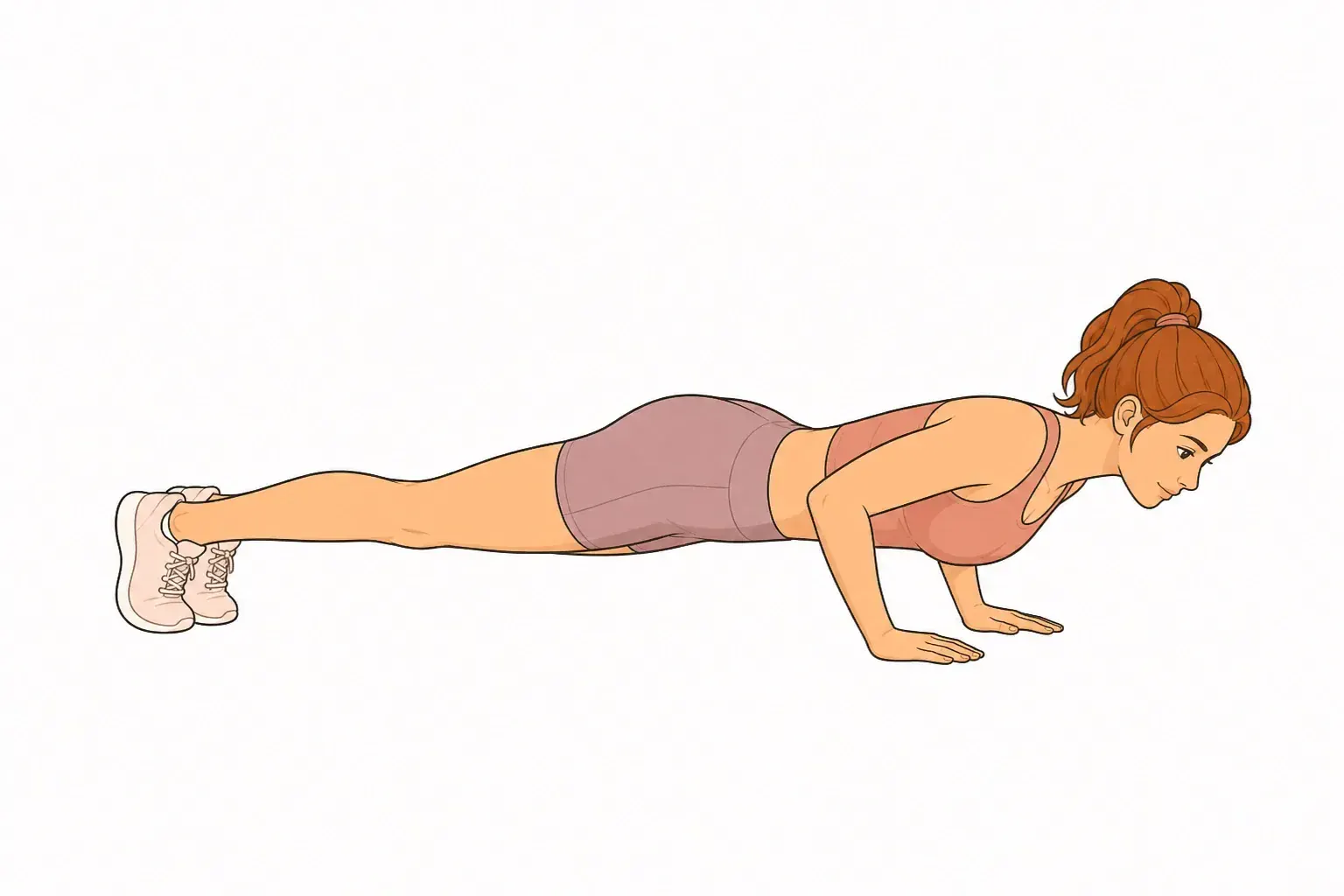
From plank position, shift weight forward and bend arms to 90 degrees, working toward full range of motion.
How to do it
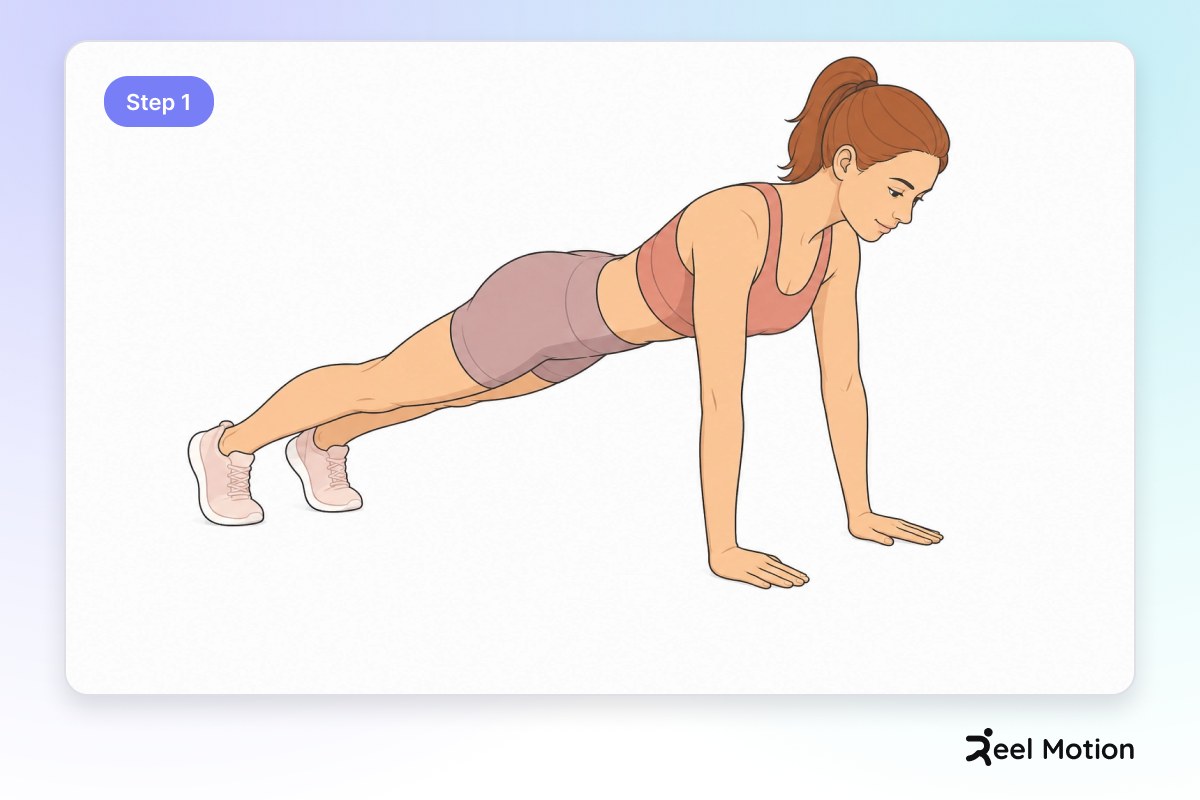
Step 1
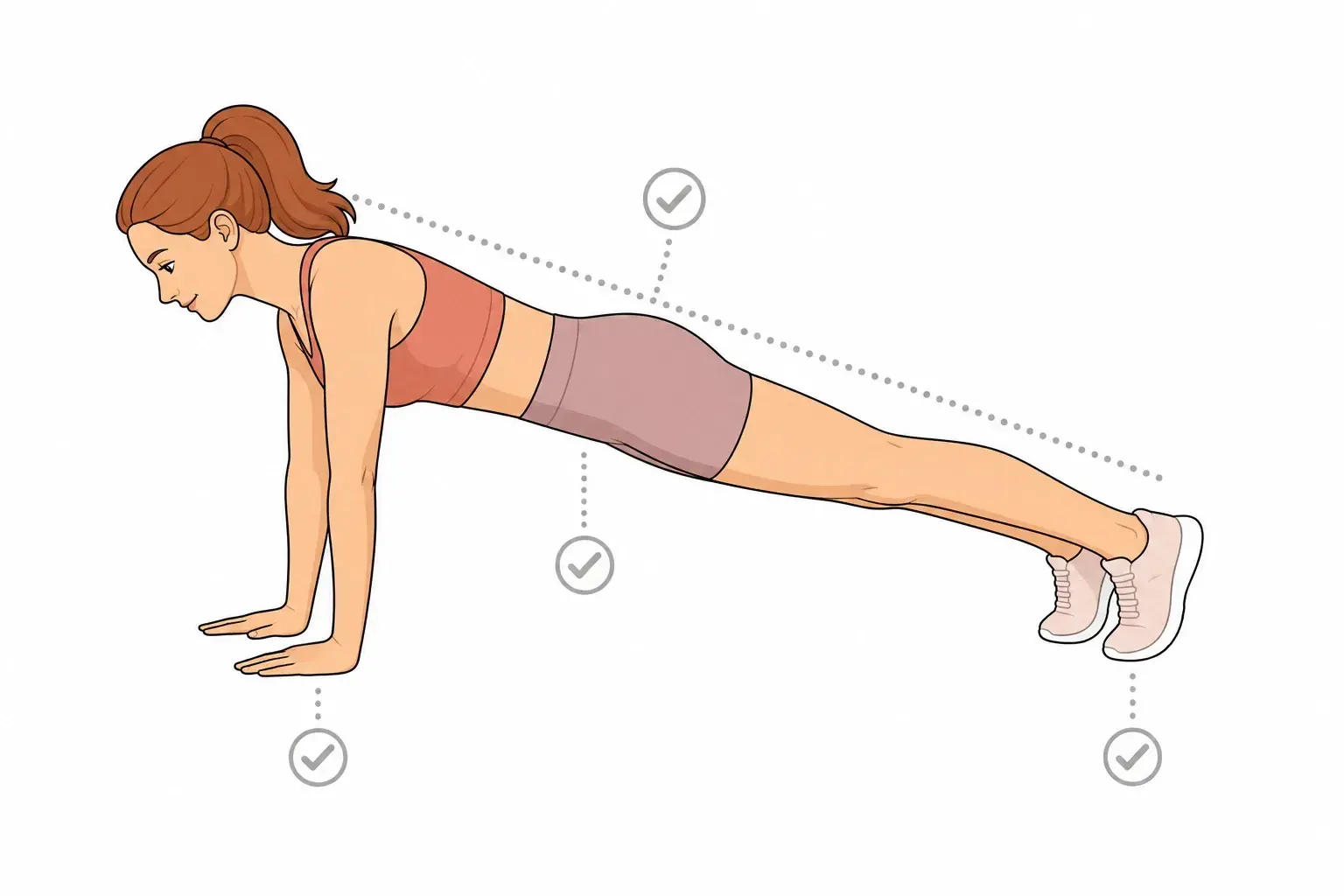
Start in a full plank position with hands shoulder-width apart, shoulders stacked over wrists, and your body in a straight line from head to heels.
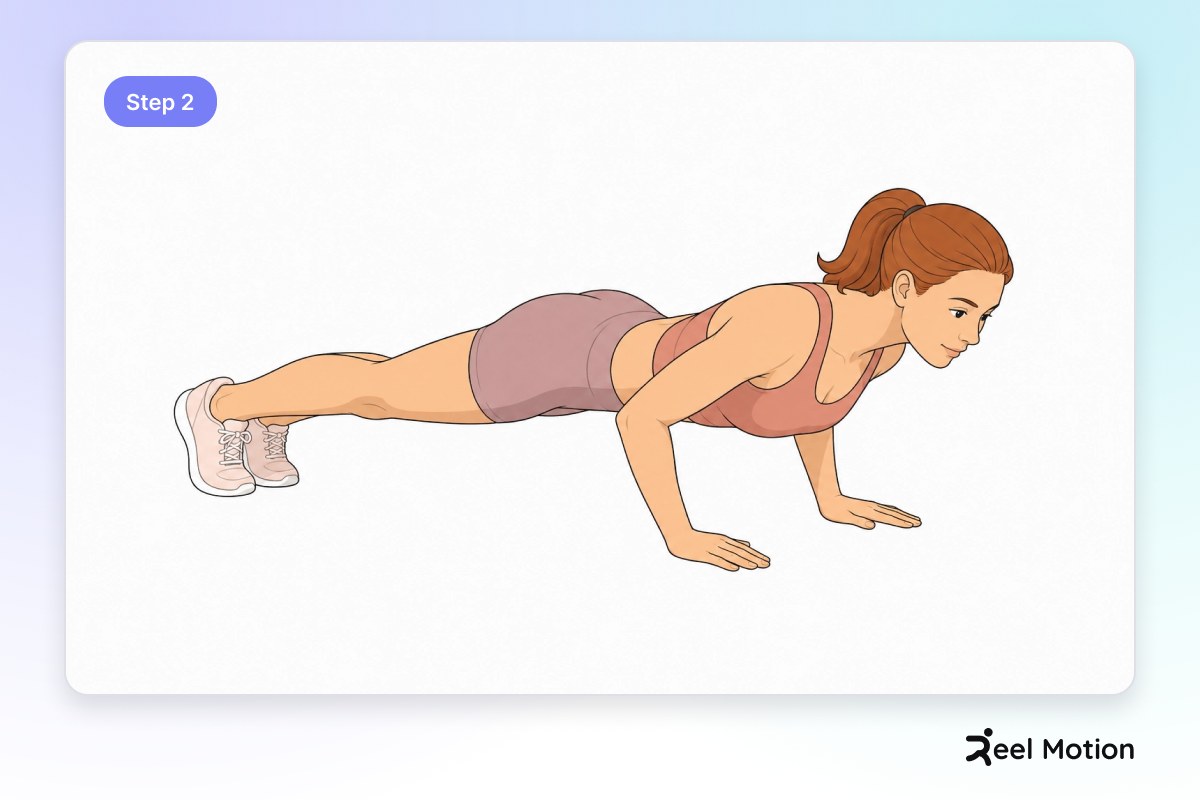
Step 2
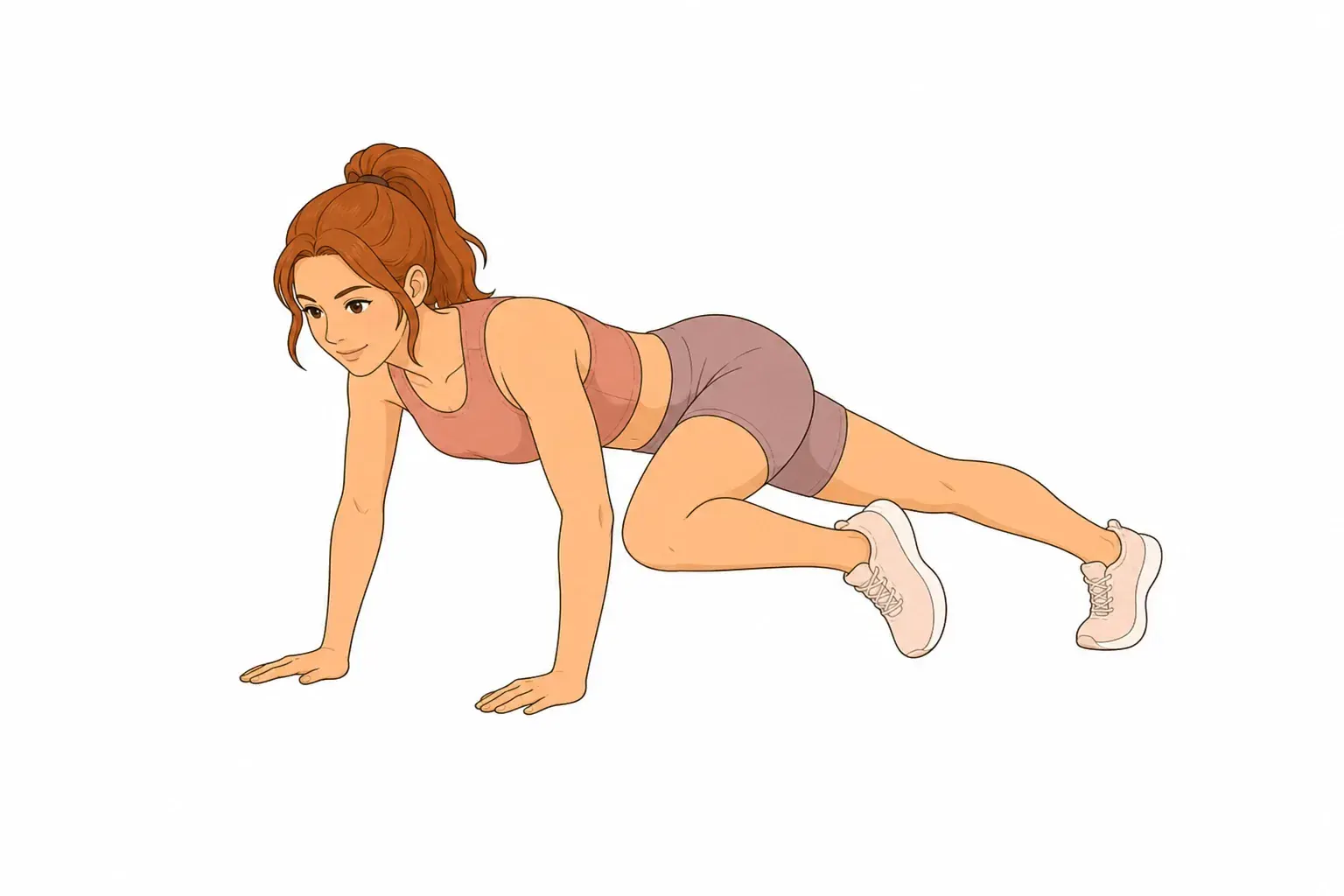
Shift your weight forward slightly, then bend your elbows to lower your body toward the floor, working toward a 90-degree bend at the elbows.
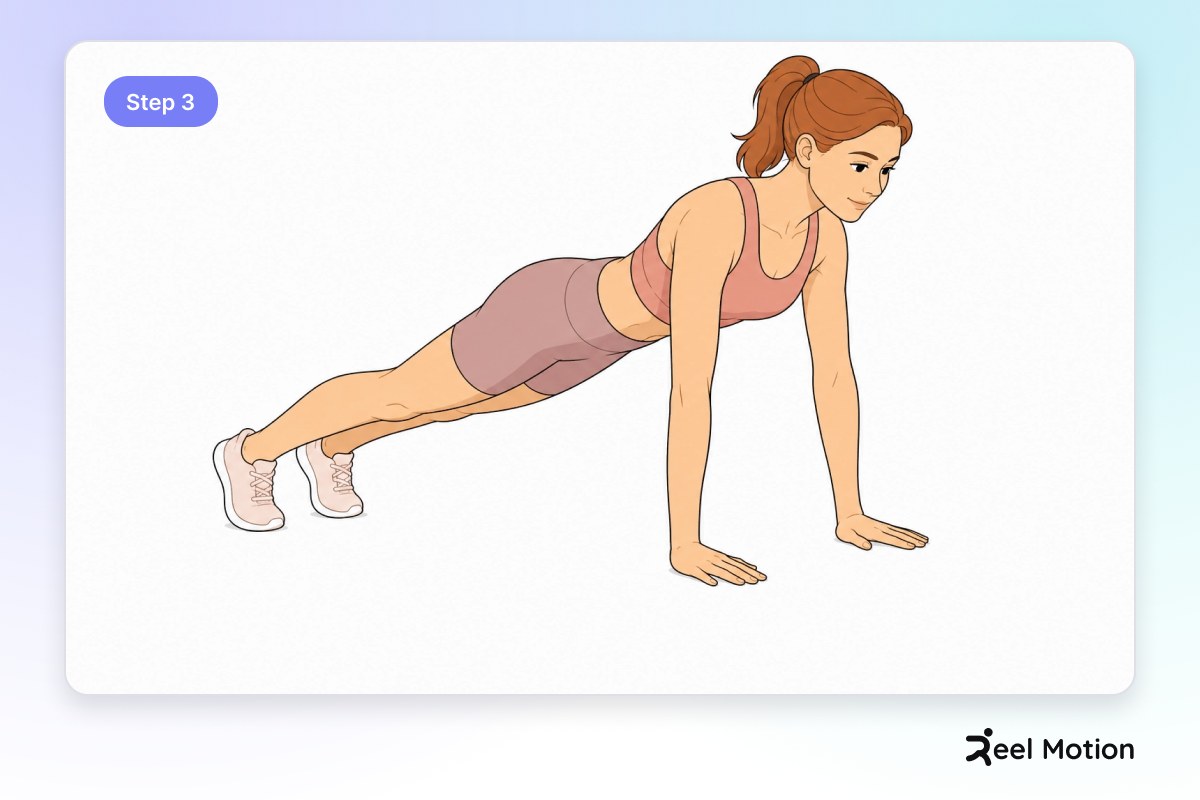
Step 3
Press through your hands to straighten your arms and return to the starting plank position.
Form cues
- Shoulders stacked directly over wrists
- Core engaged
- Body forms a straight line from head to heels
- Neck neutral, eyes down
- Elbows track close to your ribs
- Weight shifts gradually forward
- Core stays tight throughout the movement
- Push evenly through both hands
- Maintain a straight line from head to heels
- Keep your core engaged
Common mistakes
Hips sagging. Engage your core and press your hips level with your shoulders.
Shoulders hunched toward ears. Draw your shoulders down and back.
Head jutting forward. Keep your neck neutral, eyes looking at the floor.
Elbows flaring out to the sides. Keep elbows tucked close to your body.
Hips dropping as you bend. Maintain a rigid plank position—do not let your hips sag.
Rushing the movement. Move with control, bending only as far as you can maintain form.
Uneven weight distribution. Press equally through both palms.
Hips rising higher than shoulders. Keep your body in one straight line as you extend.
Breathing
- Exhale as you bend your elbows.
- Inhale as you press back up.
How to program it
Reel Motion starts you at 3 sets of 10, with 1 min of rest in between, which comes to about 45 sec in total. If the last rep of a set looks nothing like the first, drop the reps rather than pushing through.
| Sets | 3 |
|---|---|
| Reps per set | 10 |
| Rest between sets | 1 min |
| Total time | about 45 sec |
Safety
- Do not allow your lower back to sag—maintain a neutral spine throughout
- Stop before your chest touches the floor if you cannot maintain proper alignment
Where it fits in your training
If Plank with Arm Bends is more than you can hold form on right now, build up with Decline Push-Up first. Once the last set still looks clean, Planche Leans is the next step up in the same pattern. For a change at the same level, swap in Full Pushup.
Related exercises
More upper body movements in the Reel Motion library:
- Kneeling Pushups — intermediate
- Military Push-Ups — intermediate
- Push-ups — intermediate
- Archer Push-Up — intermediate