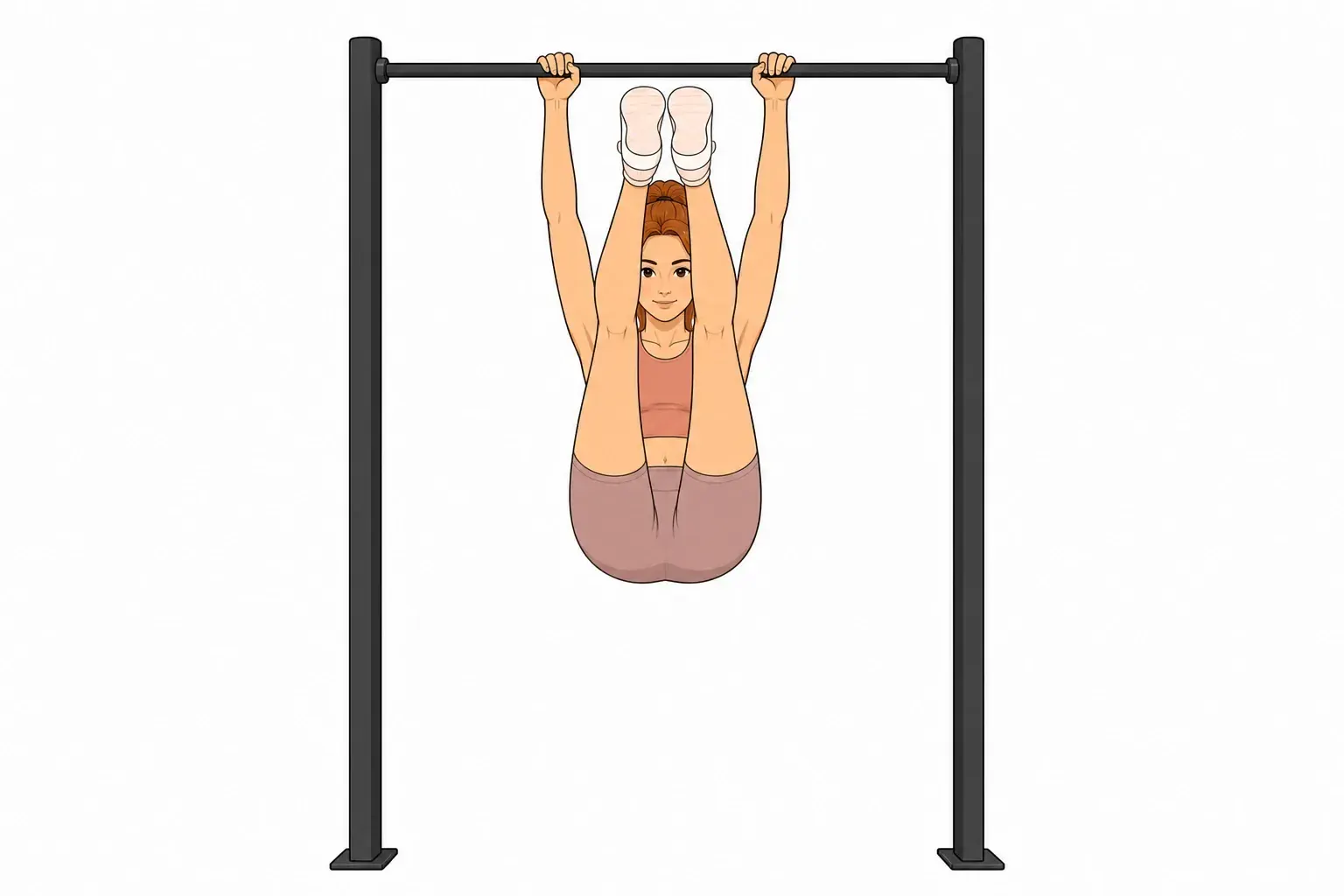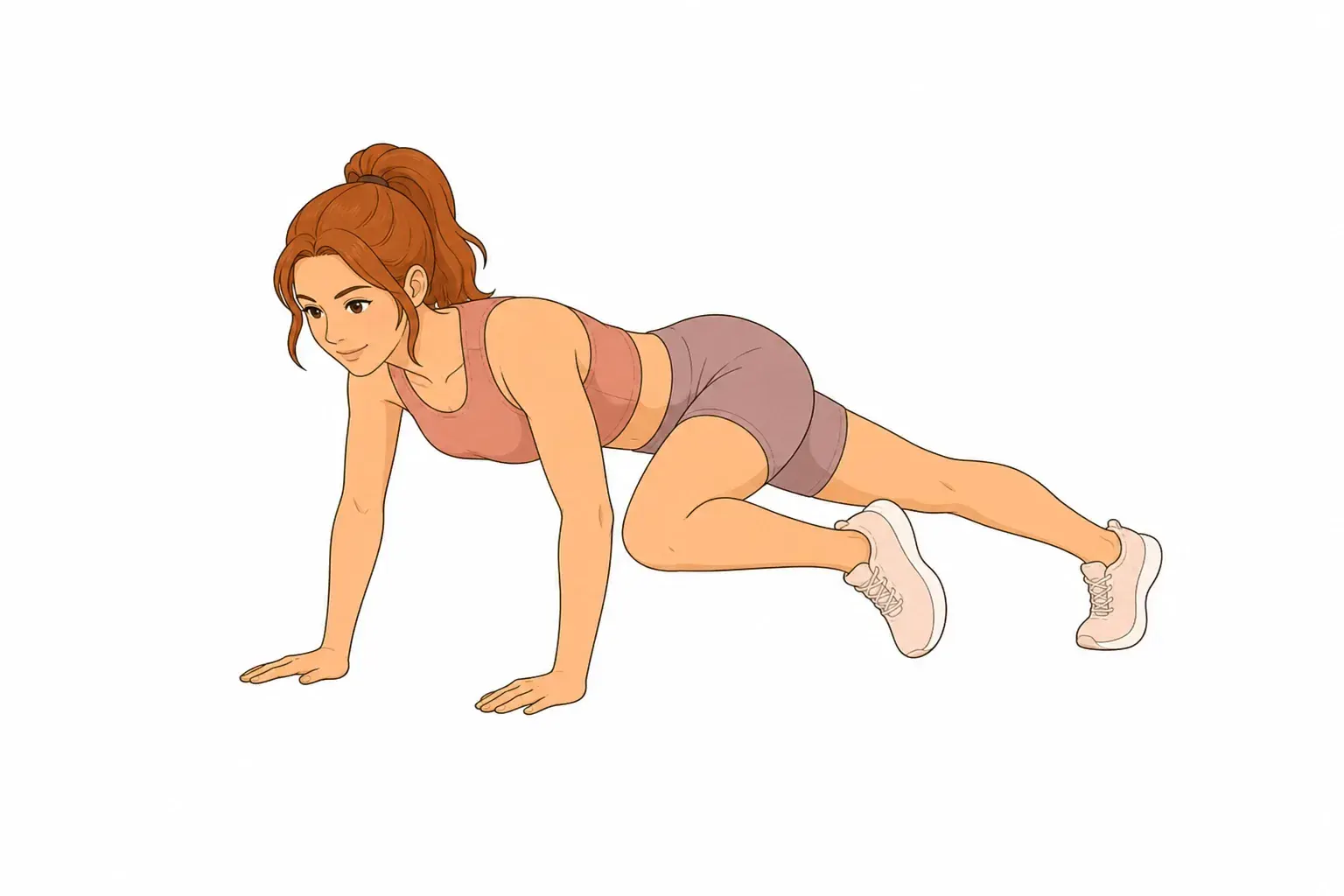

Single Leg Plank is an advanced core exercise you can do with no equipment. Below is the full movement, step by step, with the form cues and common mistakes that matter most.
At a glance
| Body area | Core |
|---|---|
| Difficulty | Advanced |
| Equipment | None — bodyweight only |
| Main muscles | Rectus abdominis, transverse abdominis, obliques, shoulders and glutes |
| Movement pattern | Isometric hold |
| Trained | One side at a time |
| Steps | 3 |
Muscles worked
The work lands mainly on your rectus abdominis, with your transverse abdominis, obliques, shoulders and glutes taking a share of it. Knowing which muscle does most of the work tells you where you will feel it the next day.
Because you train one side at a time, your core has to stop your hips and shoulders twisting on every rep, and any strength gap between your left and right side shows up immediately instead of being hidden by the stronger side.
The pattern here is isometric hold. Follow it with a moving exercise in the same session and the workout stays balanced.
Advanced variation requiring balance and unilateral core stability.
How to do it
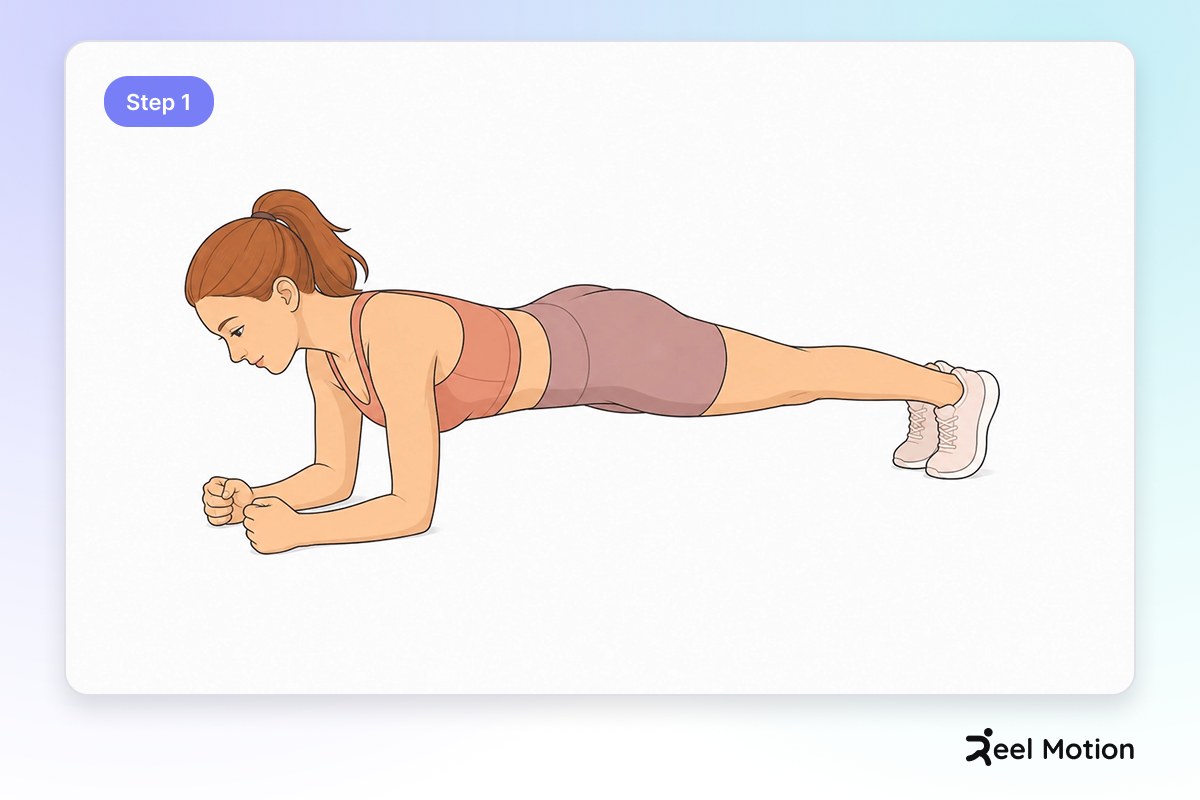
Step 1
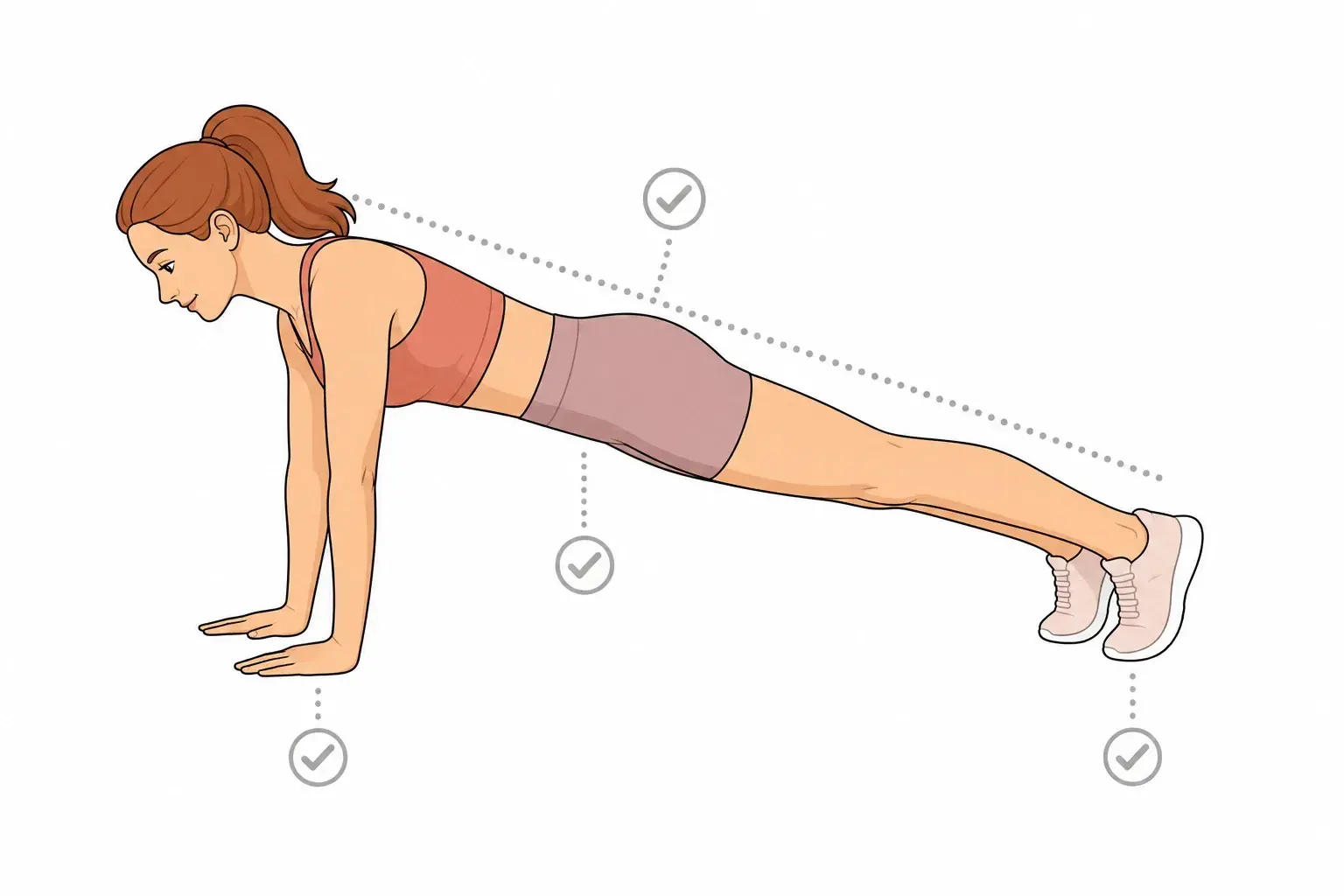
Start in a standard plank position with your forearms on the ground, elbows under your shoulders, and your body in a straight line from head to heels.
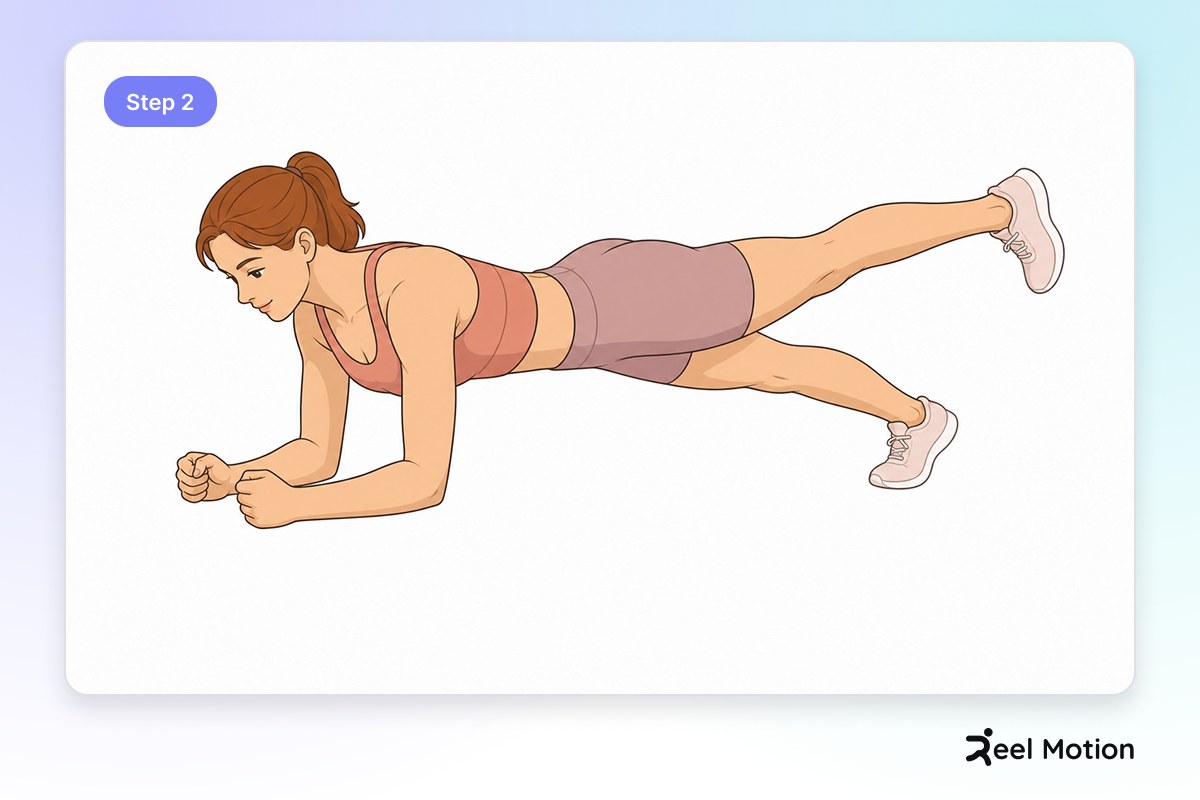
Step 2
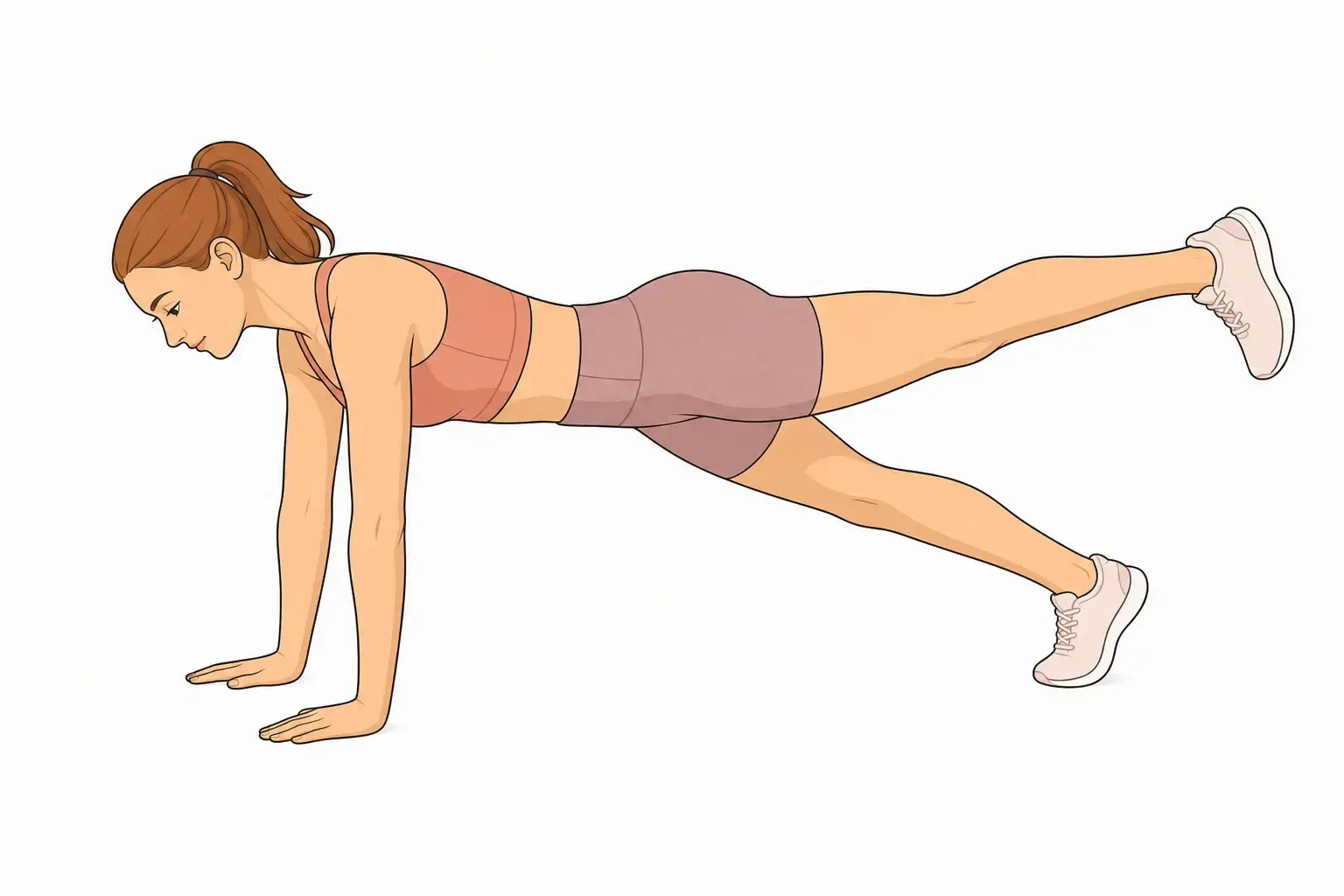
Lift one foot off the ground, keeping your hips level and your core tight, then hold this position with all your weight supported by your forearms and one leg.
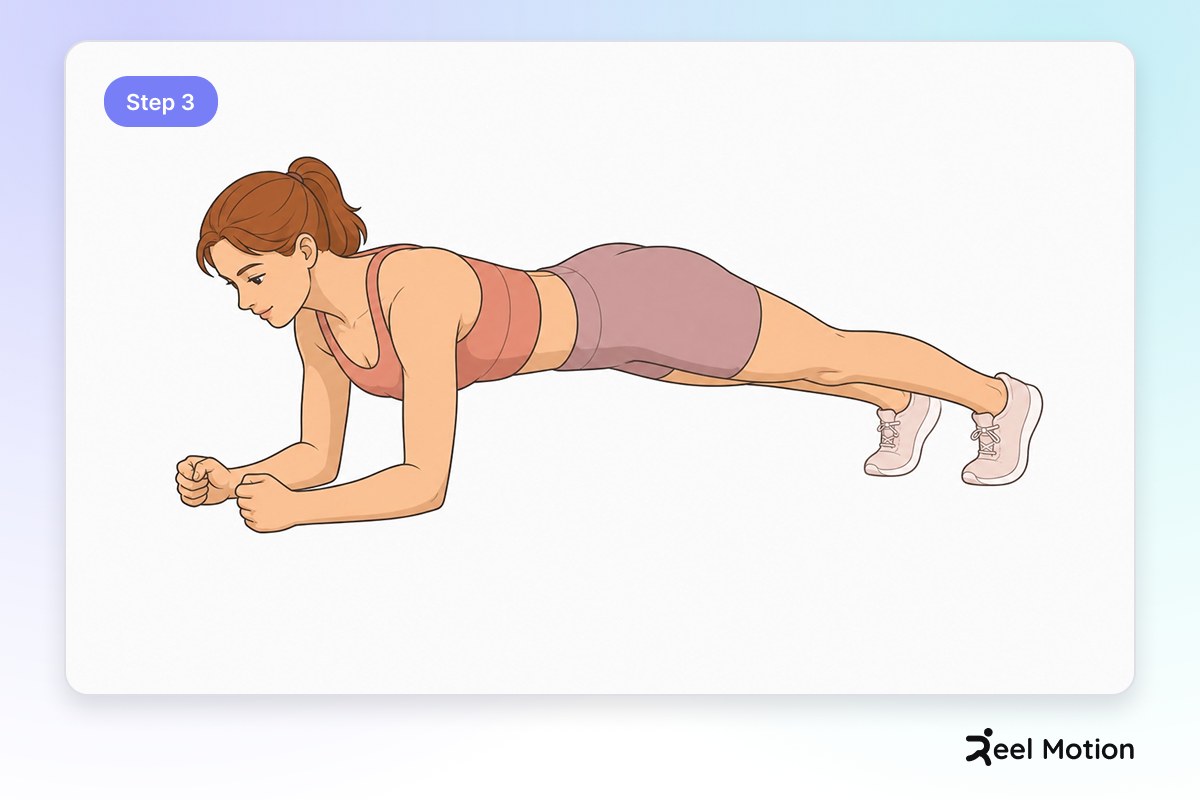
Step 3
Lower your lifted foot back to the ground with control, reset your plank position, and repeat on the opposite side.
Form cues
- Elbows directly under shoulders
- Core engaged
- Hips level with shoulders and heels
- Hips stay level—do not rotate or drop
- Core remains fully engaged
- Lifted leg stays in line with your body
- Lower your foot with control—do not drop it
- Return to a stable two-leg plank before switching
Common mistakes
Hips sagging toward the floor. Engage your core and press your hips up to align with your shoulders.
Shoulders hunched toward ears. Press your shoulders down and back, away from your ears.
Lower back arching excessively. Tighten your core to keep your lower back neutral.
Hips rotating or dropping on the lifted side. Brace your core harder and press your standing leg into the floor to keep hips square.
Core relaxing or lower back sagging. Engage your entire core—imagine bracing for a punch.
Lifted leg dropping below hip height. Keep your lifted leg aligned with your torso, not hanging down.
Dropping your foot quickly or losing control. Lower your foot slowly and deliberately to maintain core tension.
Switching legs without resetting your plank. Pause briefly in the two-leg plank to reset your alignment before lifting the other leg.
Breathing
- Breathe steadily throughout the hold.
- Exhale as you lift your foot; maintain steady breathing throughout the hold.
- Inhale as you lower your foot.
How to program it
Reel Motion starts you at 3 sets of 10 per side, with 1 min of rest in between, which comes to about 30 sec in total. Match the reps on your weaker side first, then give the stronger side the same number and no more.
| Sets | 3 |
|---|---|
| Reps per set | 10 per side |
| Rest between sets | 1 min |
| Total time | about 30 sec |
Safety
- Do not attempt this variation until you can hold a standard plank for at least 30 seconds with good form
- Stop immediately if you feel sharp pain in your lower back or shoulders
- Balance and stability are critical—perform this exercise in a safe space away from obstacles
Where it fits in your training
If Single Leg Plank is more than you can hold form on right now, build up with Elevated Feet Plank first. For a change at the same level, swap in Single Arm Plank.
Related exercises
More core movements in the Reel Motion library:
- Straight Arm Plank — beginner
- Dead Bug — beginner
- Decline Bench Crunch — beginner
- Plank Shoulder Taps — beginner