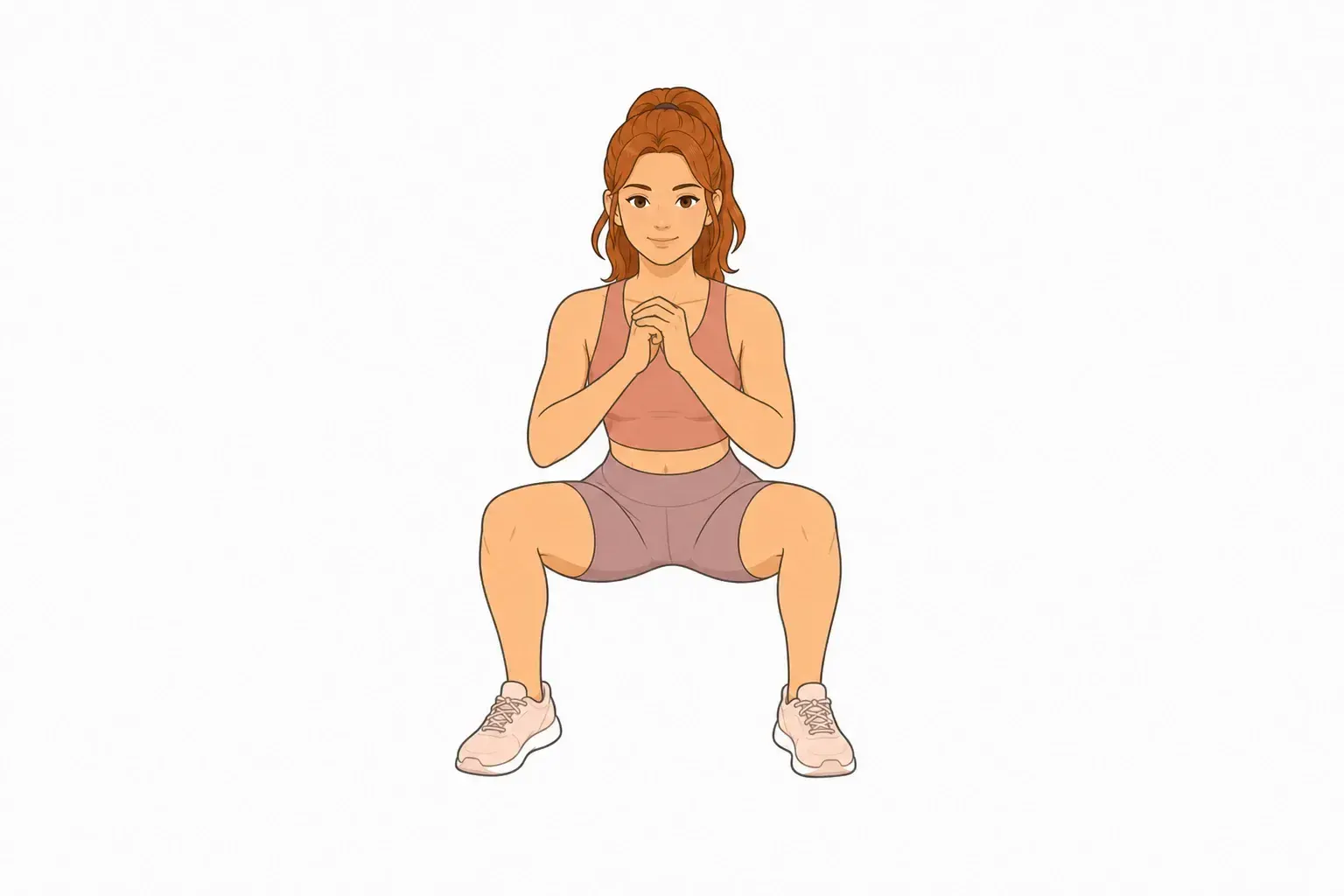

Squats is a beginner lower body exercise you can do with no equipment. Below is the full movement, step by step, with the form cues and common mistakes that matter most.
At a glance
| Body area | Lower body |
|---|---|
| Difficulty | Beginner |
| Equipment | None — bodyweight only |
| Main muscles | Quadriceps, hamstrings, glutes and hip abductors |
| Movement pattern | Squat |
| Steps | 3 |
Muscles worked
The work lands mainly on your quadriceps, with your hamstrings, glutes and hip abductors taking a share of it. That mix is what makes Squats worth keeping in a rotation rather than doing it once and forgetting it.
The pattern here is squat. Follow it with a hip hinge in the same session and the workout stays balanced.
Drive knees out to the side slightly to align body optimally for vertical force generation. Knees should track in line with the third toe of your foot. This knee positioning activates lateral hip muscles, creates stability in the hip socket, and centers the femur. Avoid knees going straight forward as this causes horizontal wobbling and reduces vertical motion efficiency.
How to do it
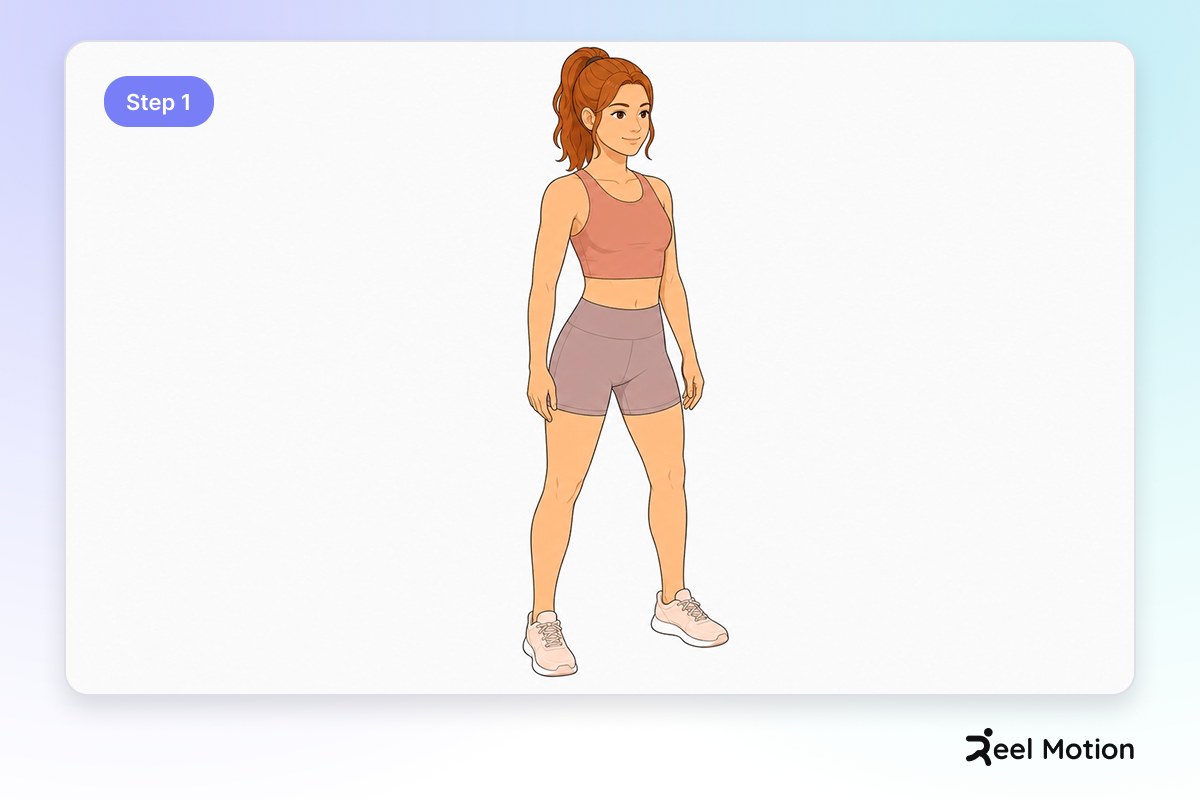
Step 1
Stand with feet shoulder-width apart, then drive your knees out slightly to the side so they track in line with your third toe, keeping your chest upright and core engaged.
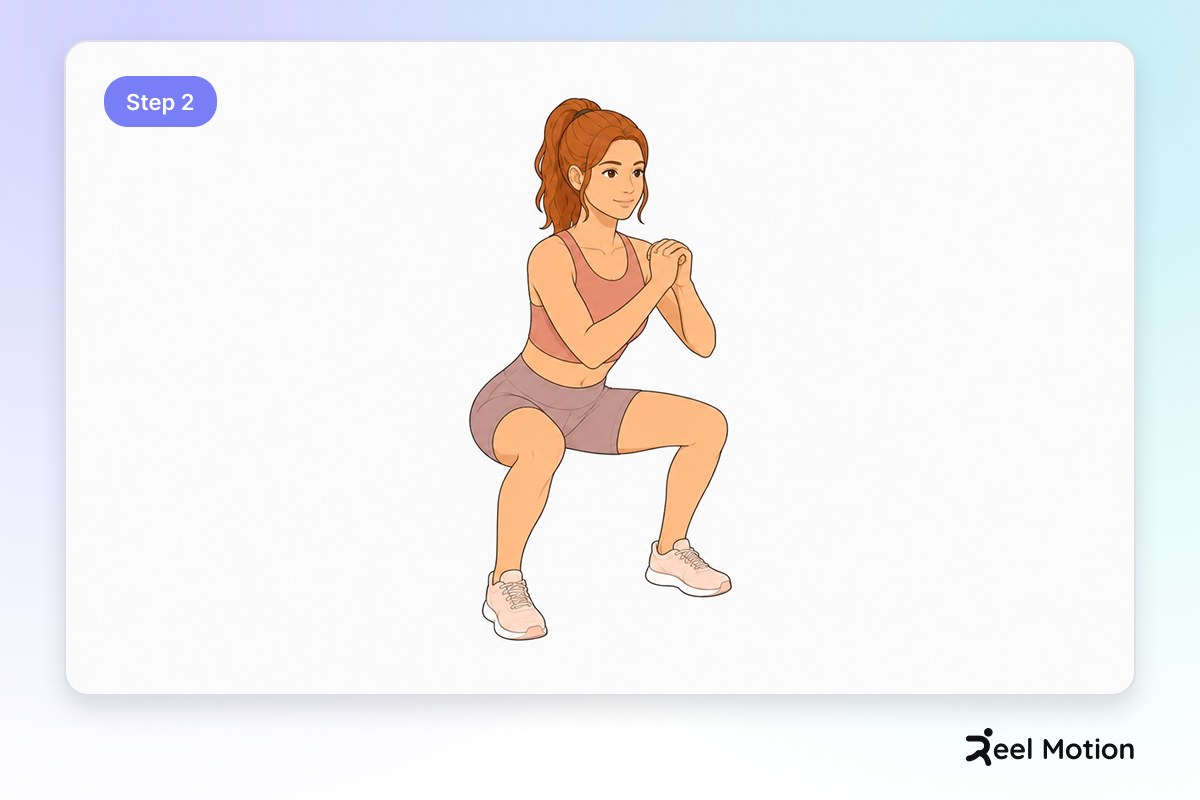
Step 2
Lower your hips back and down until your thighs reach parallel to the floor, keeping your knees tracking outward and your weight in your heels.
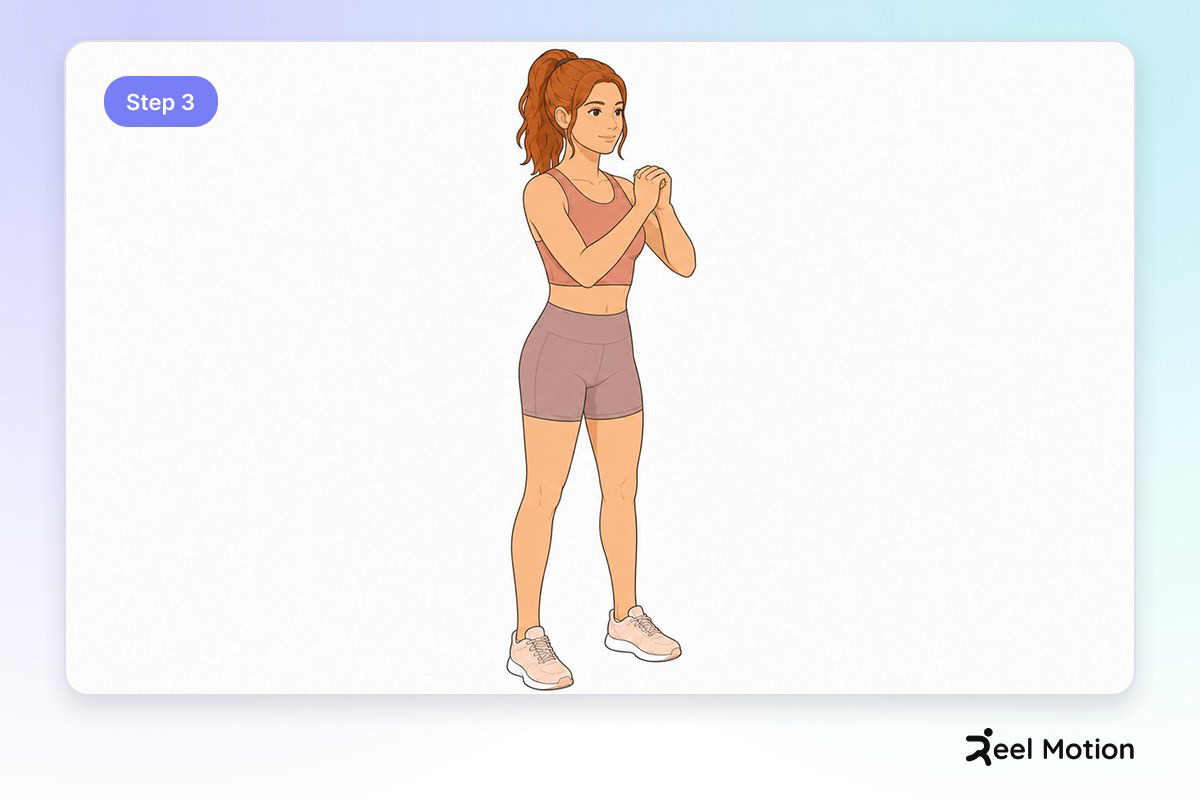
Step 3
Drive through your heels and extend your hips and knees to return to standing, maintaining the same knee alignment throughout.
Form cues
- Drive knees out to the side slightly
- Knees track in line with third toe
- Keep chest upright
- Engage your core
- Lower hips back and down
- Keep knees tracking outward
- Press weight into your heels
- Maintain upright torso
- Drive through your heels
- Extend hips and knees powerfully
- Maintain outward knee tracking
- Stand tall at the top
Common mistakes
Knees caving inward. Push knees outward to align with your third toe.
Knees tracking straight forward. Rotate hips slightly outward so knees follow your foot angle.
Chest collapsing forward. Lift your chest and shoulders back.
Core disengaged. Brace your core before you descend.
Heels rising off the floor. Press your heels into the floor throughout the descent.
Knees caving inward during descent. Drive knees outward as you lower.
Torso folding forward excessively. Keep your chest up and shoulders back.
Depth too shallow. Lower until your thighs are parallel to the ground.
Knees collapsing inward on the way up. Keep knees tracking outward as you stand.
Incomplete hip extension at the top. Fully extend your hips and knees at the top.
Leaning forward during the drive. Drive straight up without leaning.
Heels lifting during the ascent. Press your heels down as you drive upward.
Breathing
- Inhale as you lower into the squat.
- Exhale as you drive back to standing.
How to program it
Reel Motion starts you at 3 sets of 10, with 1 min of rest in between, which comes to about 3 min 30 sec in total. Change the numbers before you change the technique.
| Sets | 3 |
|---|---|
| Reps per set | 10 |
| Rest between sets | 1 min |
| Total time | about 3 min 30 sec |
Safety
- Knees tracking inward causes horizontal wobbling and reduces vertical motion efficiency; maintain outward knee drive throughout the movement.
- Knees going straight forward reduces stability in the hip socket and centers force inefficiently.
- Proper knee alignment activates lateral hip muscles, creates stability in the hip socket, and centers the femur for efficient vertical force generation.
Where it fits in your training
Once the last set still looks clean, Assisted Pistol Squat is the next step up in the same pattern. For a change at the same level, swap in Chair Pose.
Related exercises
More lower body movements in the Reel Motion library:
- Bulgarian Split Squat — intermediate
- Bodyweight Walking Lunge — beginner
- Box Jump — intermediate
- Carioca Quick Step — beginner