
Flutter Kicks is a beginner lower body exercise you can do using bench. Below is the full movement, step by step, with the form cues and common mistakes that matter most.
At a glance
| Body area | Lower body |
|---|---|
| Difficulty | Beginner |
| Equipment | Bench |
| Main muscles | Glutes and hamstrings |
| Movement pattern | Pull |
| Steps | 2 |
Muscles worked
The work lands mainly on your glutes, with your hamstrings taking a share of it. That mix is what makes Flutter Kicks worth keeping in a rotation rather than doing it once and forgetting it.
The pattern here is pull. Follow it with a pushing movement in the same session and the workout stays balanced.
How to do it
Step 1
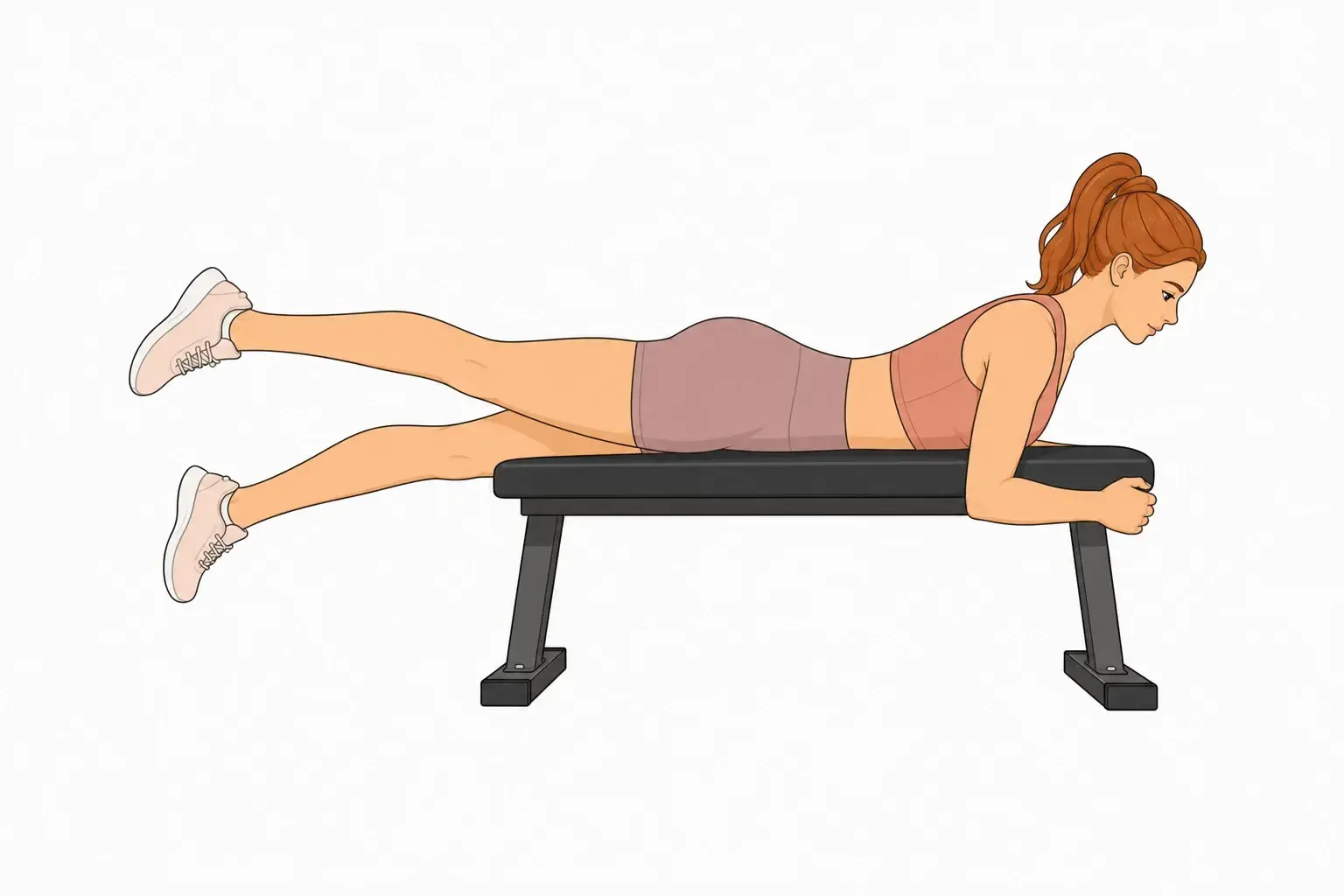
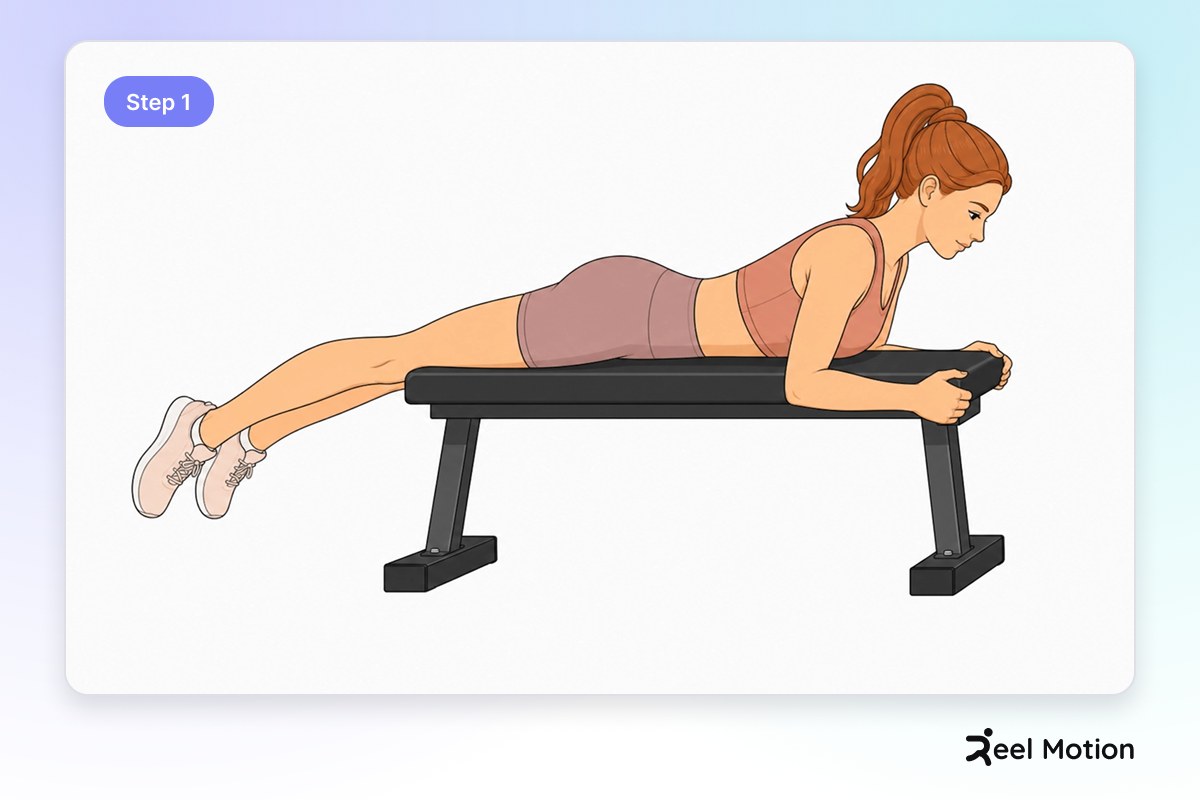
Lie facedown on a flat bench with your hips at the edge, legs straight and toes just off the floor, and grip the front edge of the bench with both hands.
Step 2
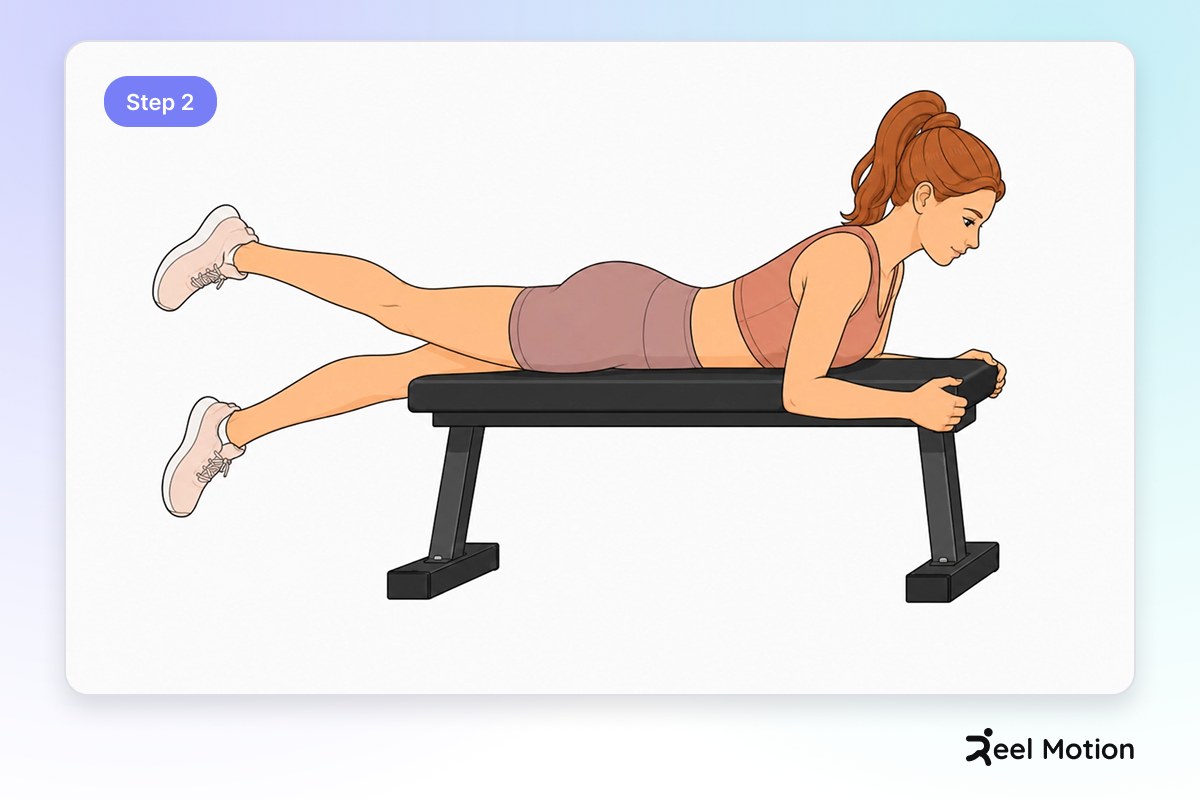
Squeeze your glutes and hamstrings to lift both legs until they are level with your hips, then begin alternating: lift your left leg higher while lowering your right leg, then switch sides in a continuous flutter motion.
Form cues
- Grip the front edge of the bench firmly with both hands
- Keep your legs straight and extended
- Position hips at the edge of the bench
- Squeeze glutes and hamstrings throughout
- Keep legs level with hips at the top of each lift
- Maintain a steady, controlled alternating rhythm
- Keep your core tight and upper body stable on the bench
- Maintain even tempo on both sides
- Keep glute and hamstring tension constant
- Stay anchored on the bench
Common mistakes
Hips too far back on the bench. Slide your hips forward until they sit right at the bench edge.
Legs bent or sagging. Straighten your legs fully and keep toes just off the floor.
Loose grip on the bench. Grip the bench edge firmly to stabilize your upper body.
Jerky or uncontrolled leg movements. Move with a smooth, controlled pace—think of kicking gently in water.
Legs dropping below hip level. Lift each leg only to hip height; do not go higher.
Hips rotating or shifting on the bench. Keep your hips anchored on the bench edge throughout.
Holding your breath. Breathe steadily and naturally throughout the movement.
Speeding up or losing control. Slow down if you feel your rhythm becoming jerky; quality over speed.
Favoring one leg over the other. Count reps equally for each leg to ensure balance.
Letting fatigue break your form. Stop the set if you cannot maintain controlled movement.
Breathing
Breathe normally and steadily throughout the movement.
Safety
- Ensure the bench is stable before starting
- Keep your core engaged to protect your lower back
- Do not arch your lower back excessively; keep your core engaged
- Maintain a firm grip on the bench to prevent sliding
Where it fits in your training
Once the last set still looks clean, Natural Glute Ham Raise is the next step up in the same pattern. For a change at the same level, swap in Sandbag Load.
Related exercises
More lower body movements in the Reel Motion library:
- Assisted Pistol Squat — intermediate
- Bodyweight Walking Lunge — beginner
- Box Jump — intermediate
- Bulgarian Split Squat — intermediate