
Natural Glute Ham Raise is an intermediate lower body exercise you can do with no equipment. Below is the full movement, step by step, with the form cues and common mistakes that matter most.
At a glance
| Body area | Lower body |
|---|---|
| Difficulty | Intermediate |
| Equipment | None — bodyweight only |
| Main muscles | Hamstrings, calves, glutes and lower back |
| Movement pattern | Pull |
| Steps | 2 |
Muscles worked
The work lands mainly on your hamstrings, with your calves, glutes and lower back taking a share of it. Knowing which muscle does most of the work tells you where you will feel it the next day.
The pattern here is pull. Follow it with a pushing movement in the same session and the workout stays balanced.
How to do it
Step 1
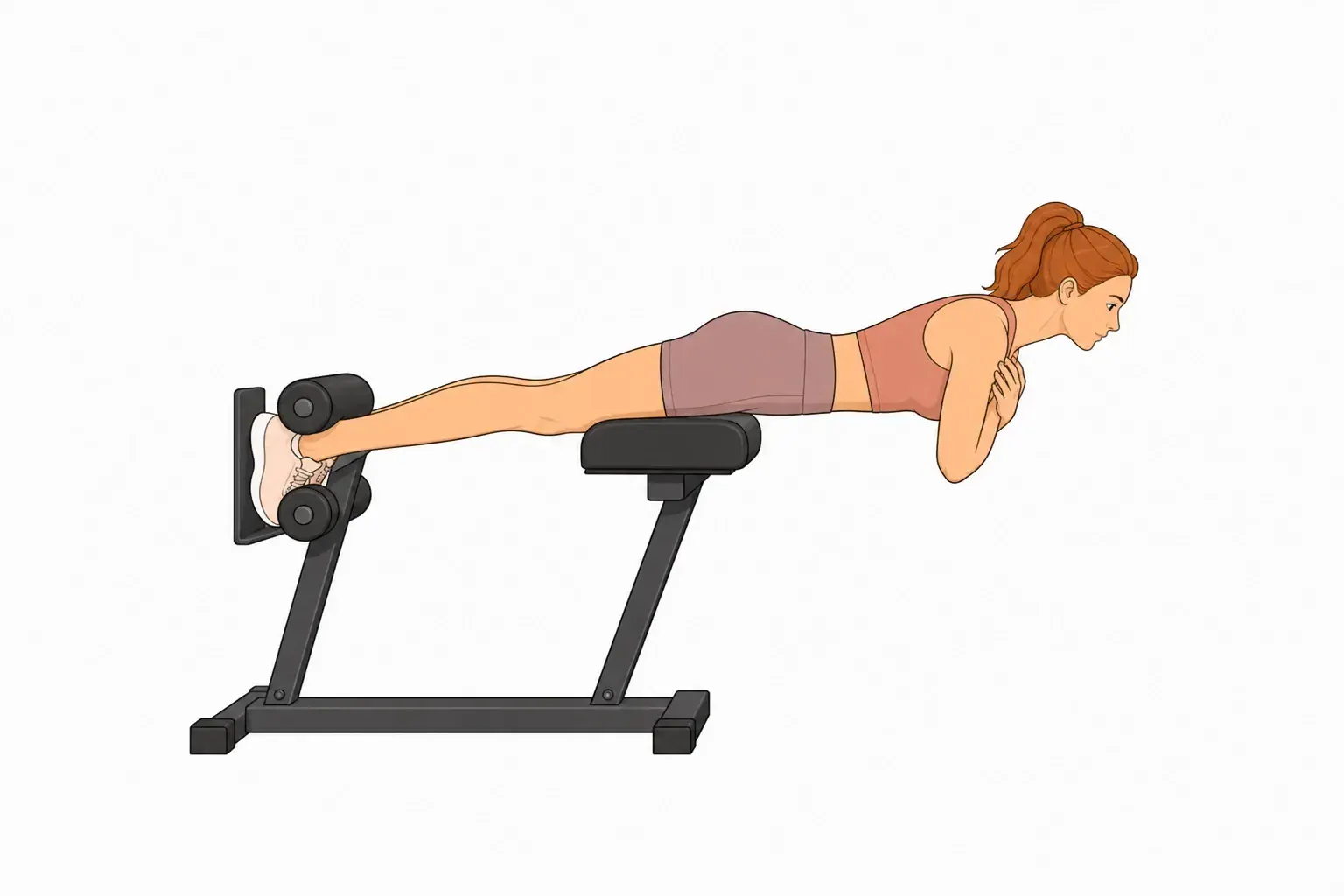
Set up on a glute ham developer with your knees on the thigh pad, your ankles locked between the roller pads and the balls of your feet against the foot plate, then hold your torso upright with your arms crossed over your chest.

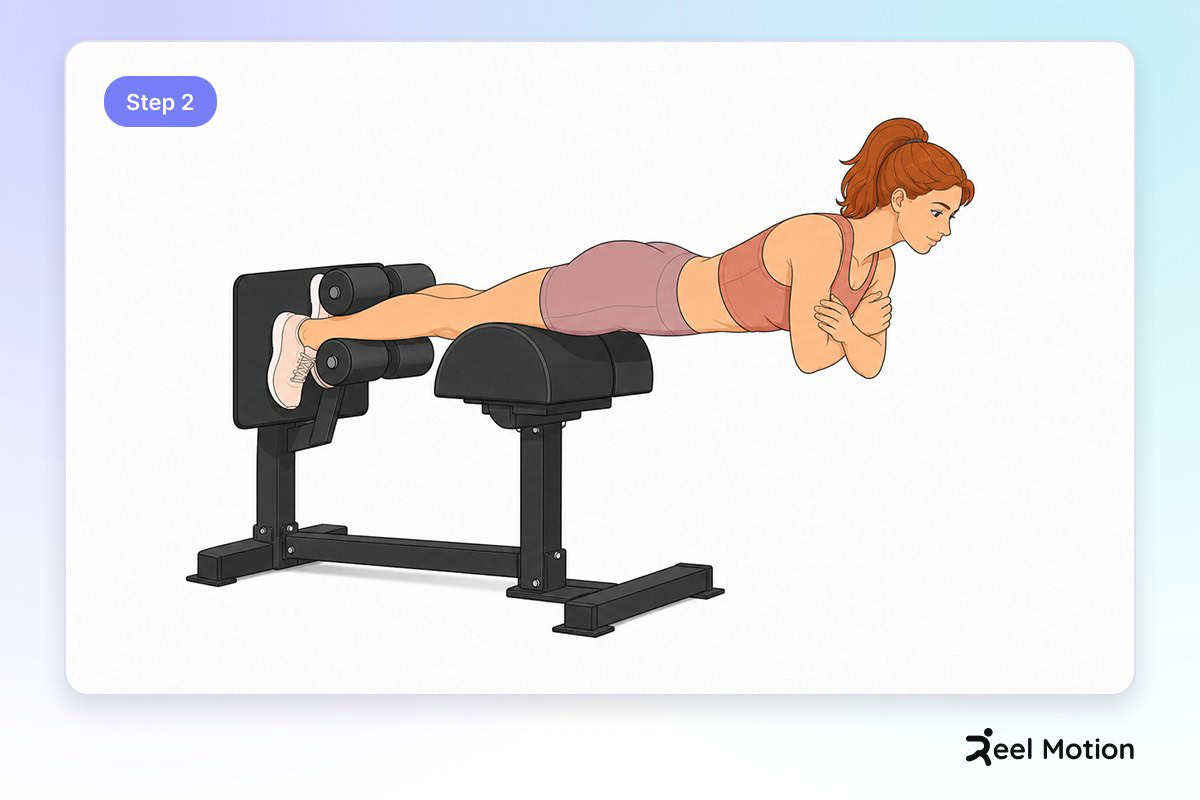
Step 2
Lower your torso forward under control until your body is horizontal and in a straight line from your knees to your head, then drive through your hamstrings and glutes to pull yourself back up to upright.
Form cues
- Chest up and proud
- Core engaged
- Upright posture
- Ankles secured under pads
- Knees firmly on the seat
- Lower until knees are nearly straight
- Keep your chest up
- Move with steady control
- Maintain core tension
- Drive through your hamstrings and glutes
- Maintain neutral spine
- Keep your core tight
- Control the upward movement
Common mistakes
Slouching or rounding the lower back. Keep your chest up and maintain a neutral spine throughout.
Ankles not fully secured under pads. Press your ankles firmly under the pads for stability.
Knees sliding off the seat. Ensure your knees stay centered and supported on the seat.
Allowing the lower back to round or hyperextend. Keep your chest proud and upright as you rise.
Losing core tension during the descent. Finish each rep with control, returning fully to the starting position.
Losing control at the top of the movement. Drive up with steady, controlled power from your posterior chain.
Allowing your chest to collapse forward. Maintain tension in your core and glutes from start to finish.
Using momentum or jerking upward. Keep your spine neutral and core engaged to protect your lower back.
Dropping or jerking downward. Descend slowly and deliberately, resisting gravity throughout.
Breathing
- Inhale as you prepare and stabilize in the starting position.
- Exhale as you lower yourself under control.
Safety
- Make sure the roller pads are adjusted so your ankles are held securely before you begin
- Do not allow your lower back to round or hyperextend
- Keep your core tight to protect your lower back throughout the movement
- If you cannot complete a rep, use a resistance band, partner assistance, or push off a box to help you return to the starting position
- Stop just before your knees lock completely to avoid joint stress
- Never jerk or drop during the lowering phase
- Never sacrifice form to complete a repetition
Where it fits in your training
If Natural Glute Ham Raise is more than you can hold form on right now, build up with Sandbag Load first.
Related exercises
More lower body movements in the Reel Motion library:
- Flutter Kicks — beginner
- Bodyweight Walking Lunge — beginner
- Carioca Quick Step — beginner
- Double Leg Butt Kick — beginner