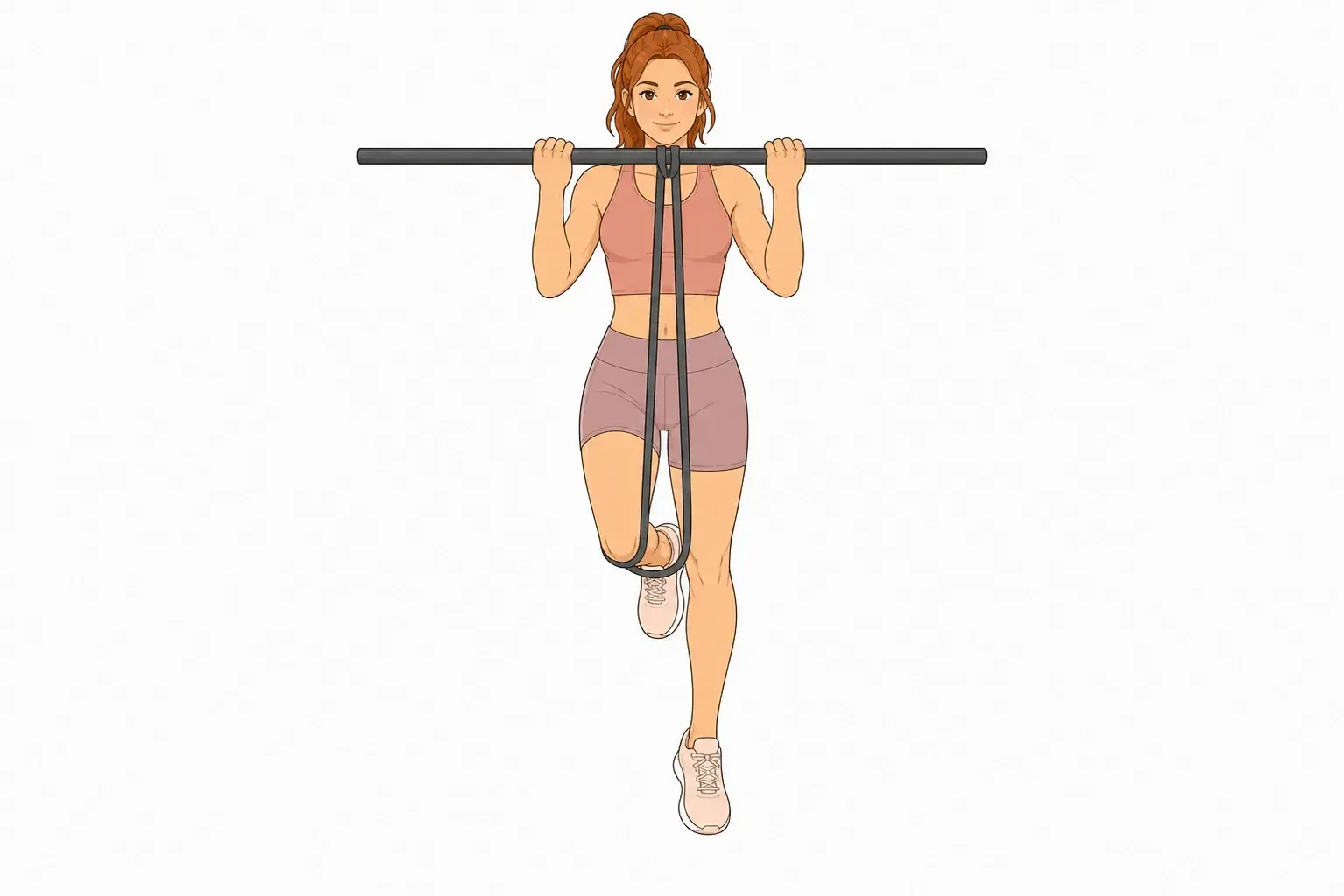

Band Assisted Pull-Up is a beginner upper body exercise you can do with no equipment. Below is the full movement, step by step, with the form cues and common mistakes that matter most.
At a glance
| Body area | Upper body |
|---|---|
| Difficulty | Beginner |
| Equipment | None — bodyweight only |
| Main muscles | Lats, abdominals, forearms and middle back |
| Movement pattern | Pull |
| Steps | 3 |
Muscles worked
The work lands mainly on your lats, with your abdominals, forearms and middle back taking a share of it. That mix is what makes Band Assisted Pull-Up worth keeping in a rotation rather than doing it once and forgetting it.
The pattern here is pull. Follow it with a pushing movement in the same session and the workout stays balanced.
How to do it
Step 1
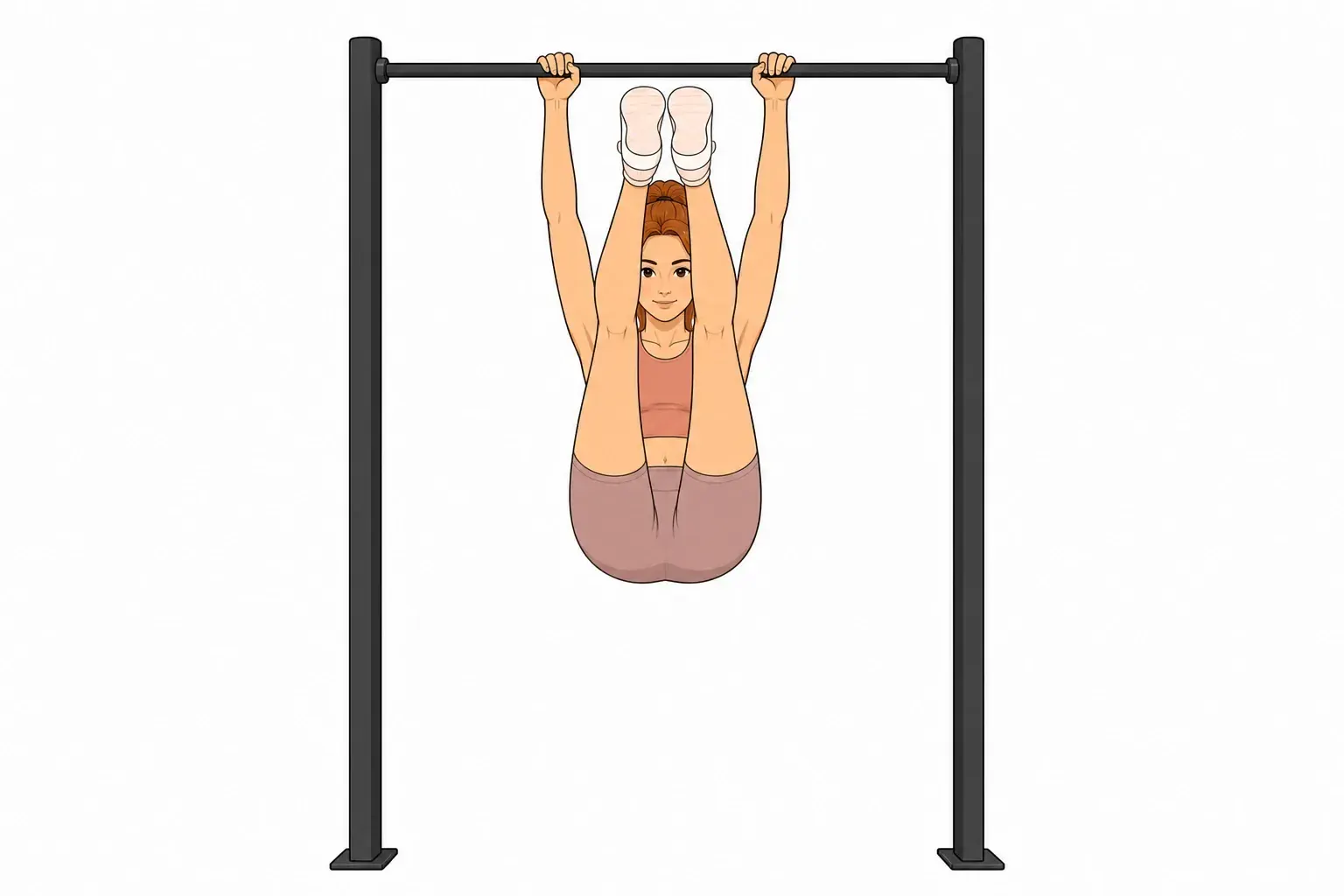
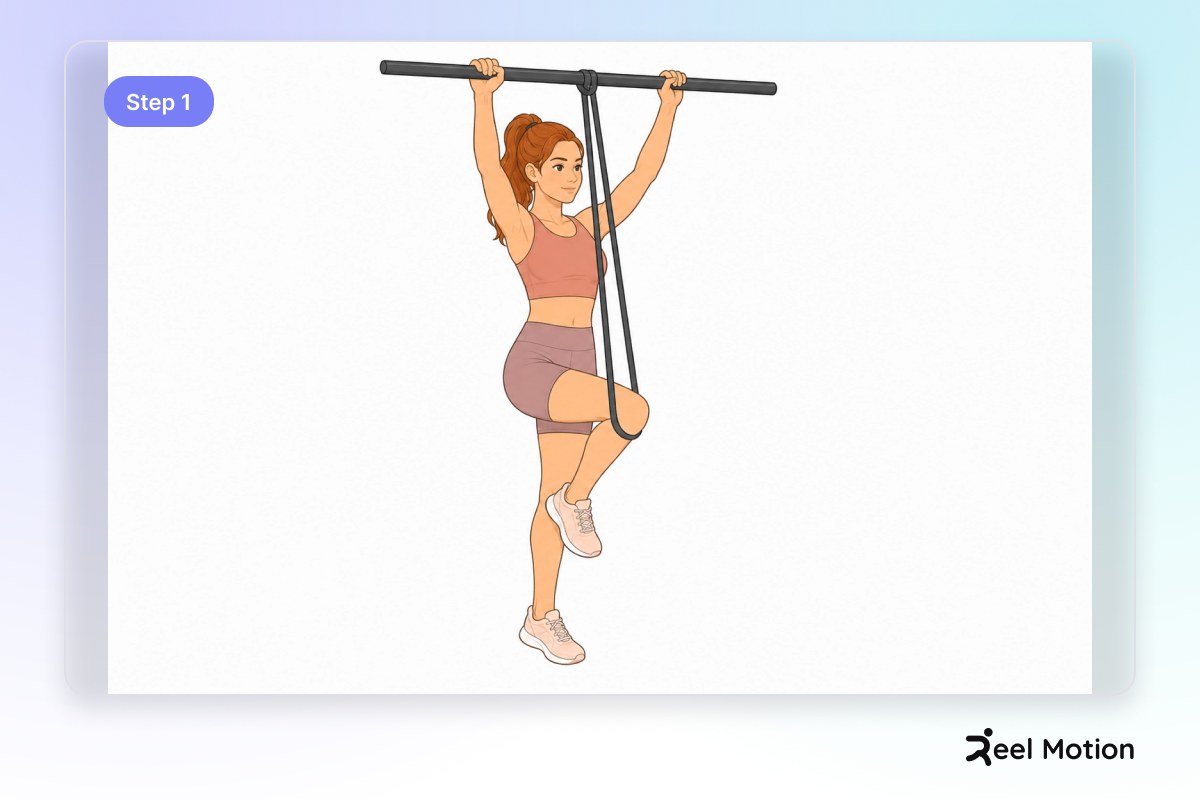
Choke the band around the center of the pull-up bar, then pull one end down and place your bent knee into the loop, ensuring it sits securely. Take a medium to wide grip on the bar with your hands shoulder-width apart or slightly wider.
Step 2
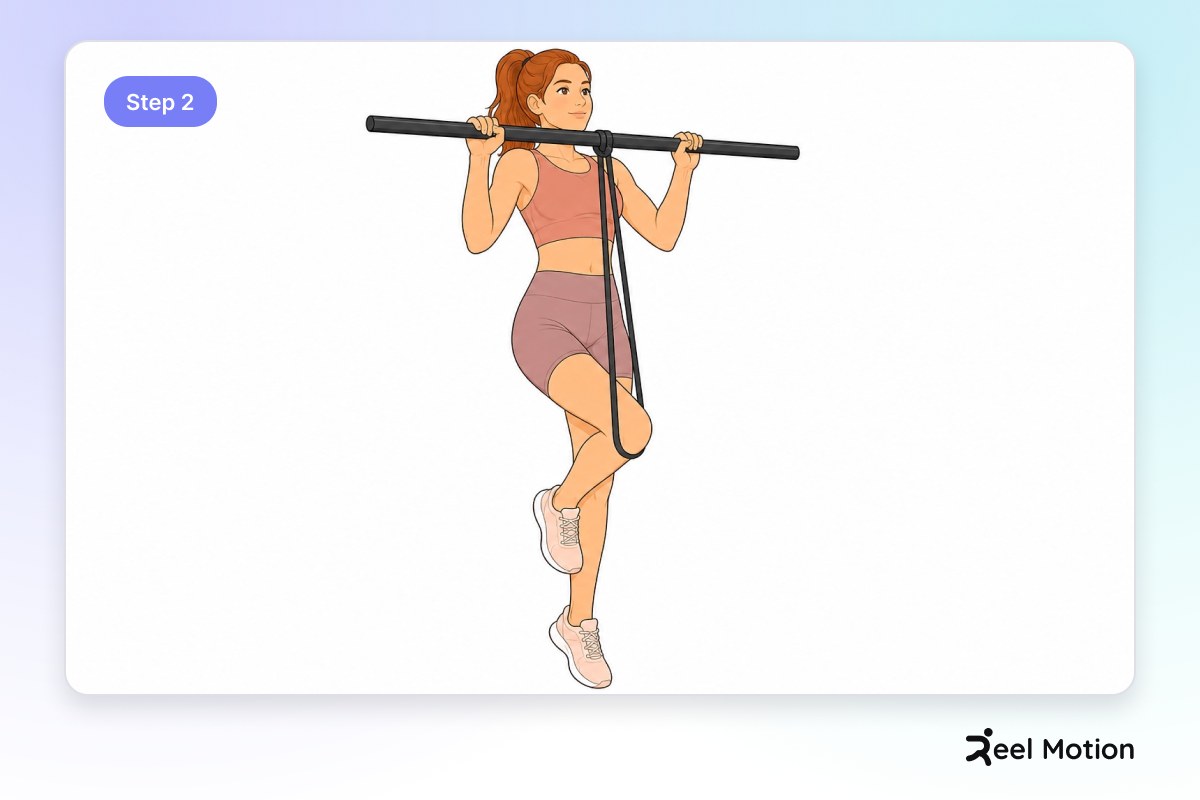
Pull yourself upward by contracting your lats and flexing your elbows, driving your elbows down and toward your sides. Pull to the front and attempt to bring your chin over the bar, moving with control and avoiding any swinging or jerking.
Step 3
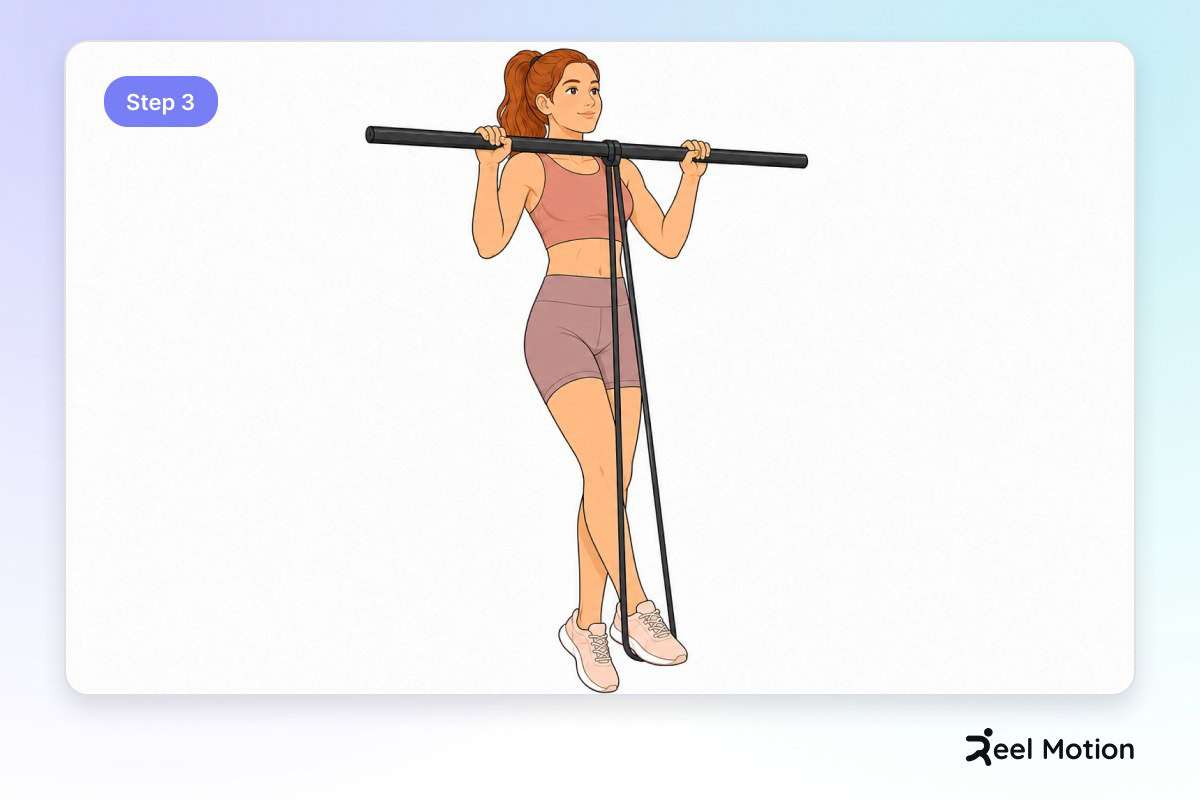
Hold briefly at the top with your chin over the bar, then lower yourself back to the starting position with control.
Form cues
- Grip the bar firmly with hands shoulder-width or wider
- Bend your knee and seat it fully in the band loop
- Keep your shoulders relaxed before pulling
- Drive your elbows down and back toward your sides
- Engage your lats throughout the pull
- Keep your chest up and shoulders back
- Move with steady, controlled rhythm
- Pause briefly at the top position
- Lower yourself with the same controlled pace as your pull
- Keep tension in your lats throughout the descent
Common mistakes
Band slipping out from under the knee. Adjust the band loop so it wraps snugly around your bent knee and won't shift during the pull.
Grip too narrow or too loose. Widen your grip to shoulder-width or slightly beyond for better lat engagement.
Knee not fully supported in the loop. Press your knee firmly into the band loop before you begin pulling.
Swinging or jerking the body. Pull with a smooth, deliberate motion—let your muscles do the work, not momentum.
Elbows flaring out to the sides. Keep your elbows tucked close to your body as you pull upward.
Momentum-driven movement instead of muscle control. Focus on contracting your lats and back muscles to initiate the pull.
Dropping quickly from the top. Lower yourself at a steady pace—take 2–3 seconds to return to the starting position.
Losing control during the descent. Maintain muscle engagement as you descend; do not let gravity do all the work.
Relaxing your muscles before reaching the start. Return to full arm extension at the bottom before starting your next repetition.
Breathing
- Exhale as you pull yourself upward.
- Inhale as you lower yourself back down.
How to program it
Reel Motion starts you at 3 sets of 10, with 1 min of rest in between, which comes to about 3 min 30 sec in total. Change the numbers before you change the technique.
| Sets | 3 |
|---|---|
| Reps per set | 10 |
| Rest between sets | 1 min |
| Total time | about 3 min 30 sec |
Safety
- Ensure the band is securely looped around the bar and your knee before starting any movement
- Use a band thickness appropriate for your strength level; lighter bands provide more assistance
- Avoid jerking or swinging, which can strain your shoulders and elbows
- Stop if you feel sharp pain in your joints
- Never drop suddenly from the top; a controlled descent builds strength and protects your joints
Where it fits in your training
Once the last set still looks clean, Bodyweight Mid Row is the next step up in the same pattern. For a change at the same level, swap in Chin-Up.
Related exercises
More upper body movements in the Reel Motion library:
- Inverted Row — beginner
- Inverted Row with Straps — beginner
- Scapular Pull-Up — beginner
- V-Bar Pullup — beginner