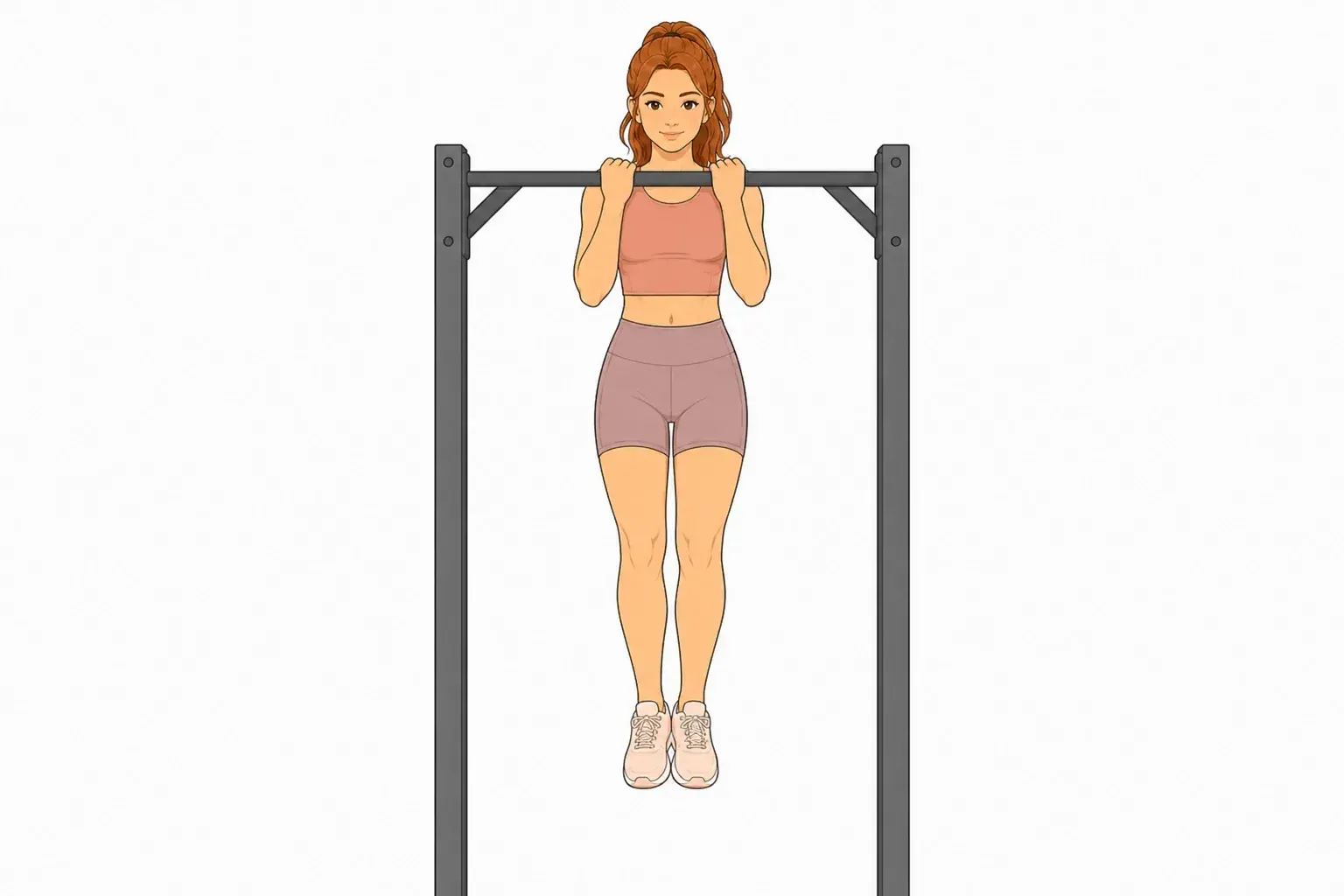

Chin-Up is a beginner upper body exercise you can do using pull-up bar. Below is the full movement, step by step, with the form cues and common mistakes that matter most.
At a glance
| Body area | Upper body |
|---|---|
| Difficulty | Beginner |
| Equipment | Pull-up bar |
| Main muscles | Lats, biceps, forearms and middle back |
| Movement pattern | Pull |
| Steps | 3 |
Muscles worked
The work lands mainly on your lats, with your biceps, forearms and middle back taking a share of it. Knowing which muscle does most of the work tells you where you will feel it the next day.
The pattern here is pull. Follow it with a pushing movement in the same session and the workout stays balanced.
How to do it
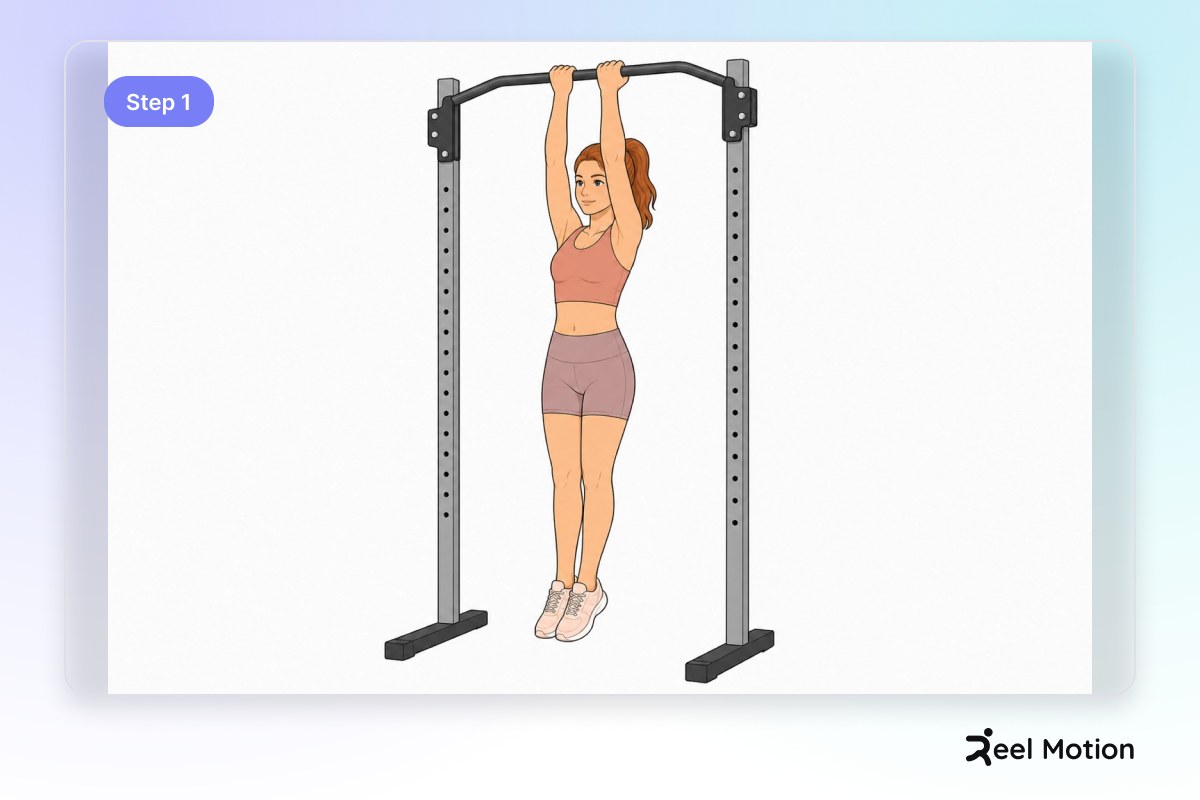
Step 1
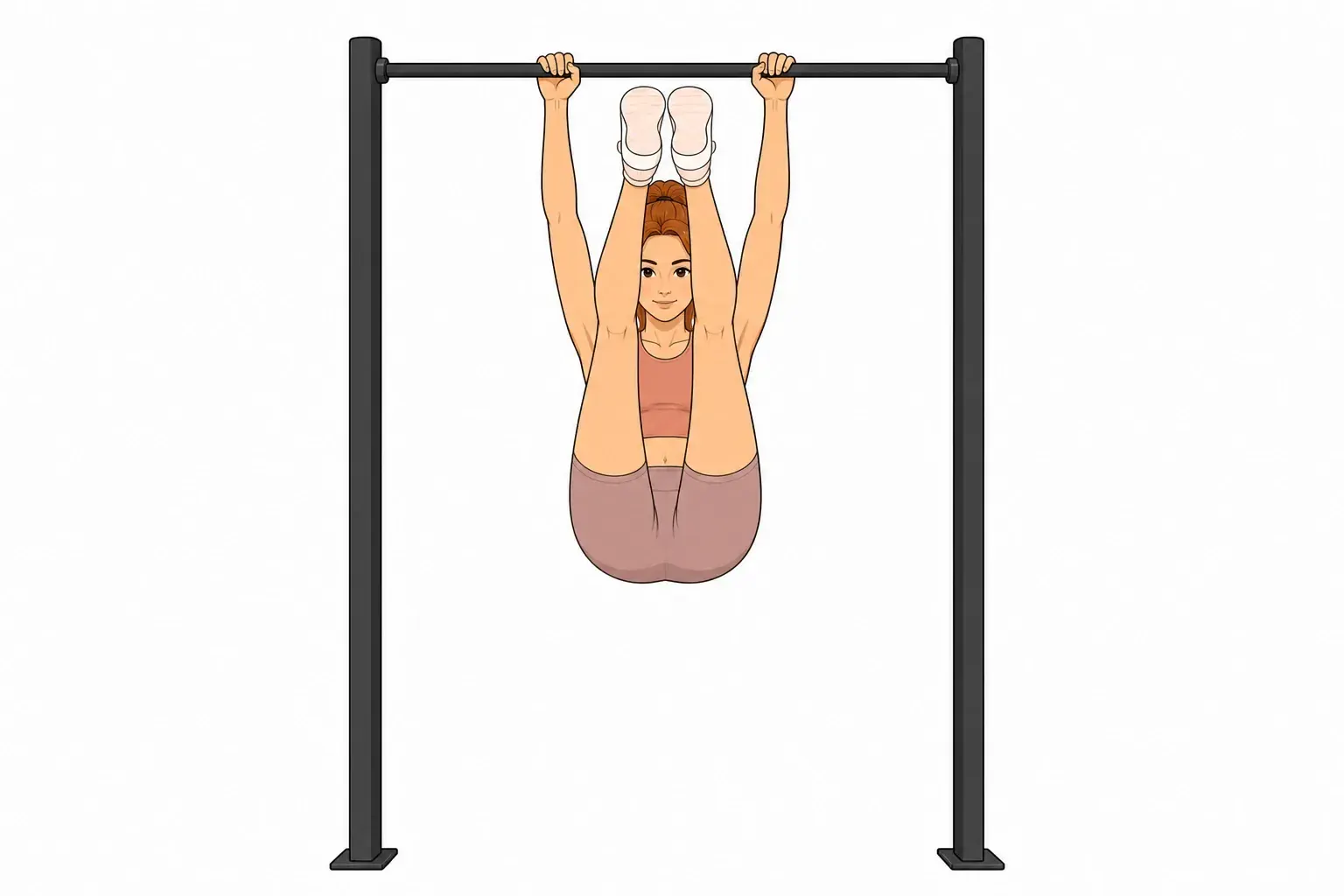
Grip the pull-up bar with palms facing toward your body, hands closer than shoulder-width apart, and hang with your arms fully extended.
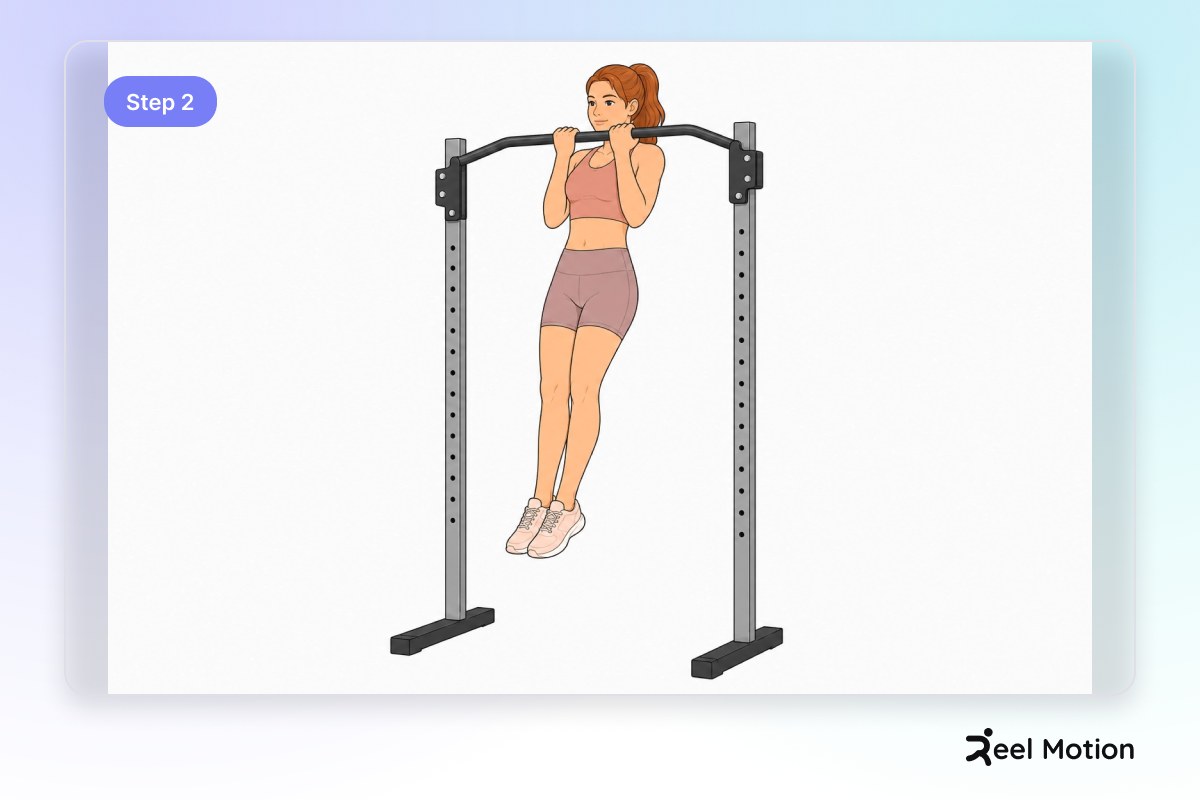
Step 2
Pull your torso upward by driving with your biceps until your head reaches the level of the bar, keeping your elbows close to your body and your upper torso stationary.
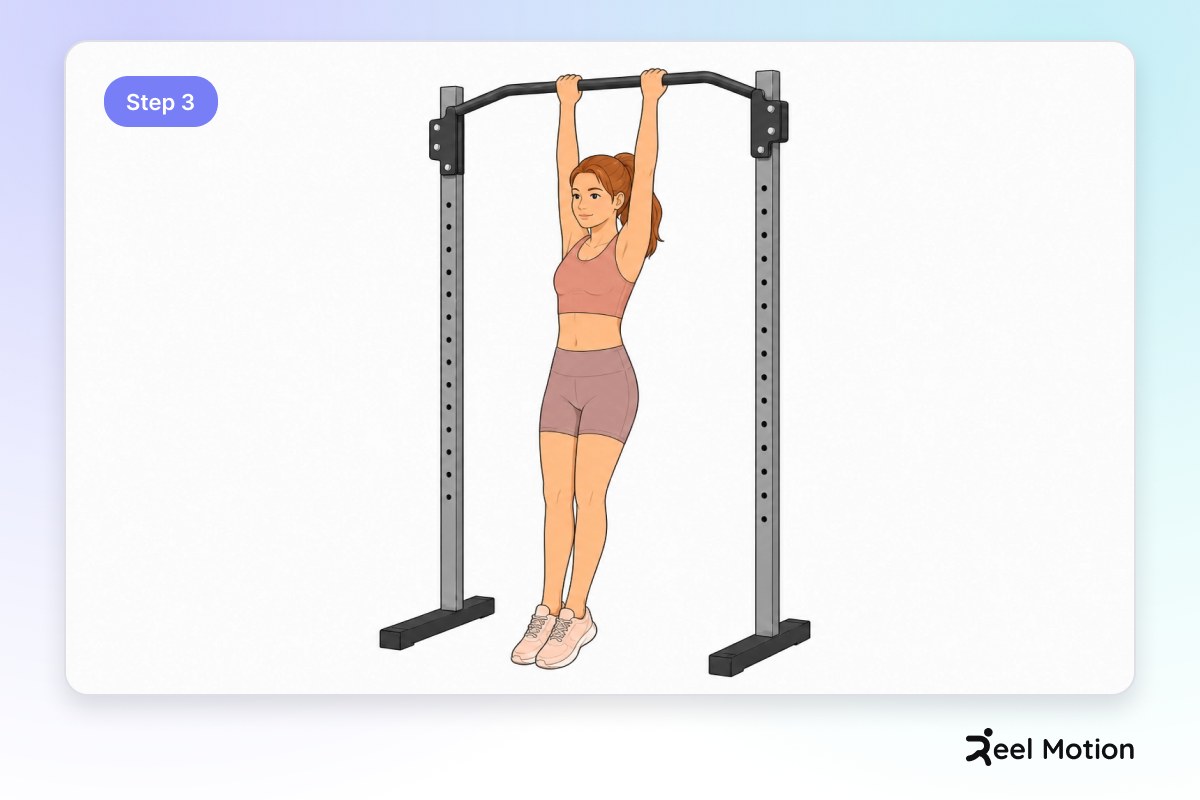
Step 3
Hold for one second at the top with your biceps squeezed, then slowly lower your torso back to the starting position with your arms fully extended.
Form cues
- Palms facing your torso
- Hands closer than shoulder-width
- Arms fully extended
- Chest out
- Lower back slightly arched
- Torso upright
- Keep elbows close to your body
- Drive the movement with your biceps
- Upper torso remains stationary
- Head rises to bar level
- Forearms only grip the bar, no extra work
- Squeeze your biceps at the top
- Lower with controlled, steady speed
- Return to full arm extension
- Keep elbows close during the descent
Common mistakes
Palms facing away from body. Turn palms to face your torso for biceps focus.
Hands too wide. Bring hands closer together, inside shoulder-width.
Rounded lower back. Arch your lower back slightly and stick your chest out.
Slouched posture. Keep your torso upright and engaged.
Elbows flaring out to the sides. Keep your elbows tucked close to your ribs throughout the pull.
Using back muscles to initiate the pull. Focus on contracting your biceps to drive the movement upward.
Swinging or kipping the body. Move only your arms; keep your torso and shoulders stable.
Forearms doing extra work beyond gripping. Let your forearms simply hold the bar while your biceps do the work.
Dropping quickly from the top. Pause and squeeze your biceps for one full second at the top.
Losing control on the way down. Lower yourself at a slow, controlled pace—take 2–3 seconds to descend.
Elbows flaring during descent. Keep your elbows tucked close to your body as you lower.
Incomplete range of motion. Extend your arms fully at the bottom before starting the next rep.
Breathing
- Exhale as you pull upward.
- Inhale as you lower yourself.
Safety
- Ensure the bar is secure and can support your full body weight
- Use a sturdy pull-up bar mounted at appropriate height
- Do not swing or use momentum; control the movement throughout
- Stop if you feel sharp pain in shoulders or elbows
- Never drop or fall from the bar; control the descent to protect your shoulders and elbows
Where it fits in your training
Once the last set still looks clean, Bodyweight Mid Row is the next step up in the same pattern. For a change at the same level, swap in Band Assisted Pull-Up.
Related exercises
More upper body movements in the Reel Motion library:
- Inverted Row with Straps — beginner
- V-Bar Pullup — beginner
- Inverted Row — beginner
- Muscle-Up — advanced