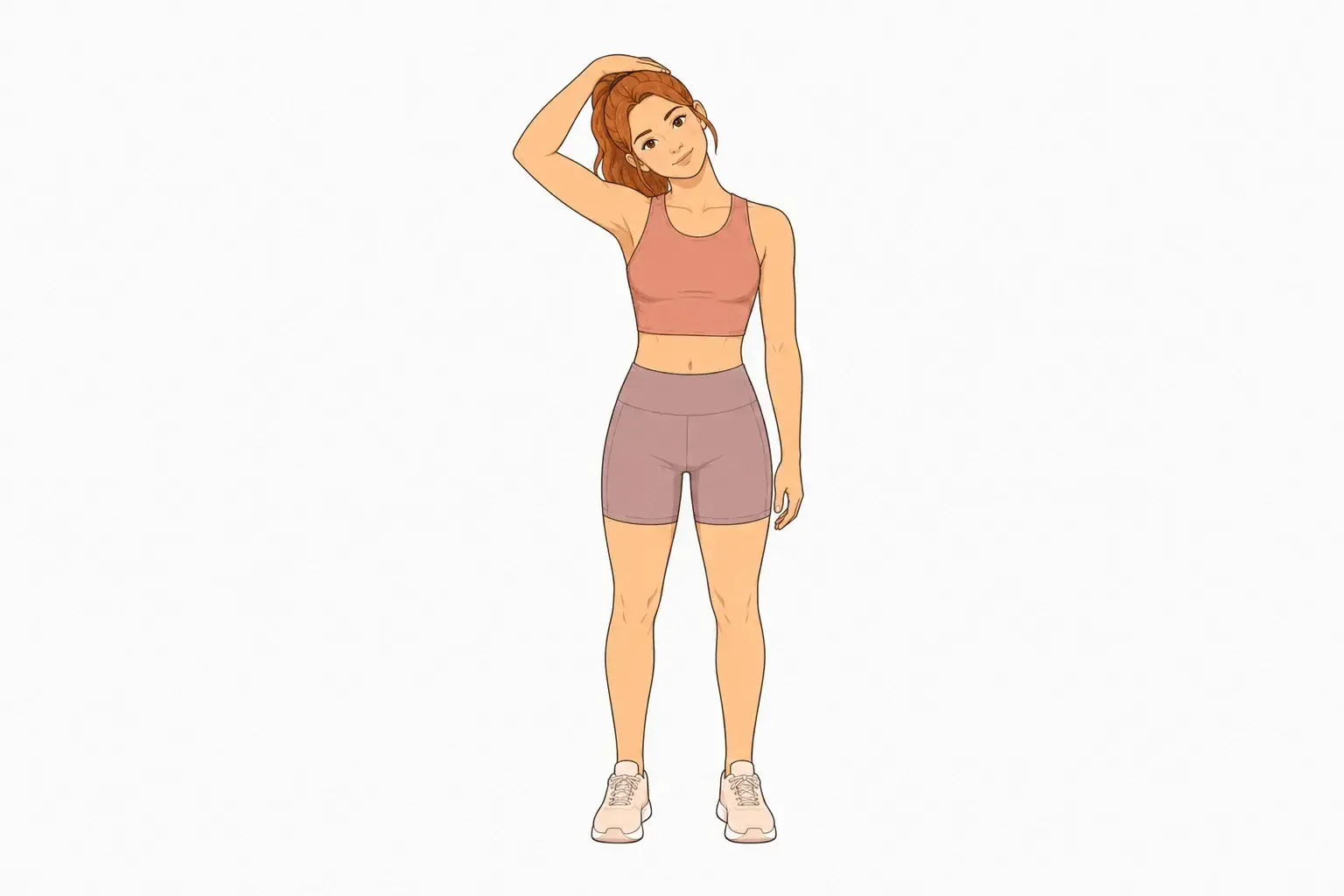

Upper Trapezius Stretch is a beginner upper body exercise you can do with no equipment. Below is the full movement, step by step, with the form cues and common mistakes that matter most.
At a glance
| Body area | Upper body |
|---|---|
| Difficulty | Beginner |
| Equipment | None — bodyweight only |
| Main muscles | Trapezius and sternocleidomastoid |
| Movement pattern | Lateral flexion |
| Steps | 2 |
Muscles worked
The work lands mainly on your trapezius, with your sternocleidomastoid taking a share of it. That mix is what makes Upper Trapezius Stretch worth keeping in a rotation rather than doing it once and forgetting it.
The pattern here is lateral flexion.
Sit with good posture. Bring ear toward shoulder on same side, place hand on opposite side of head and apply gentle pressure. Hold and rotate head to find tight areas. Stretch where comfortable.
How to do it
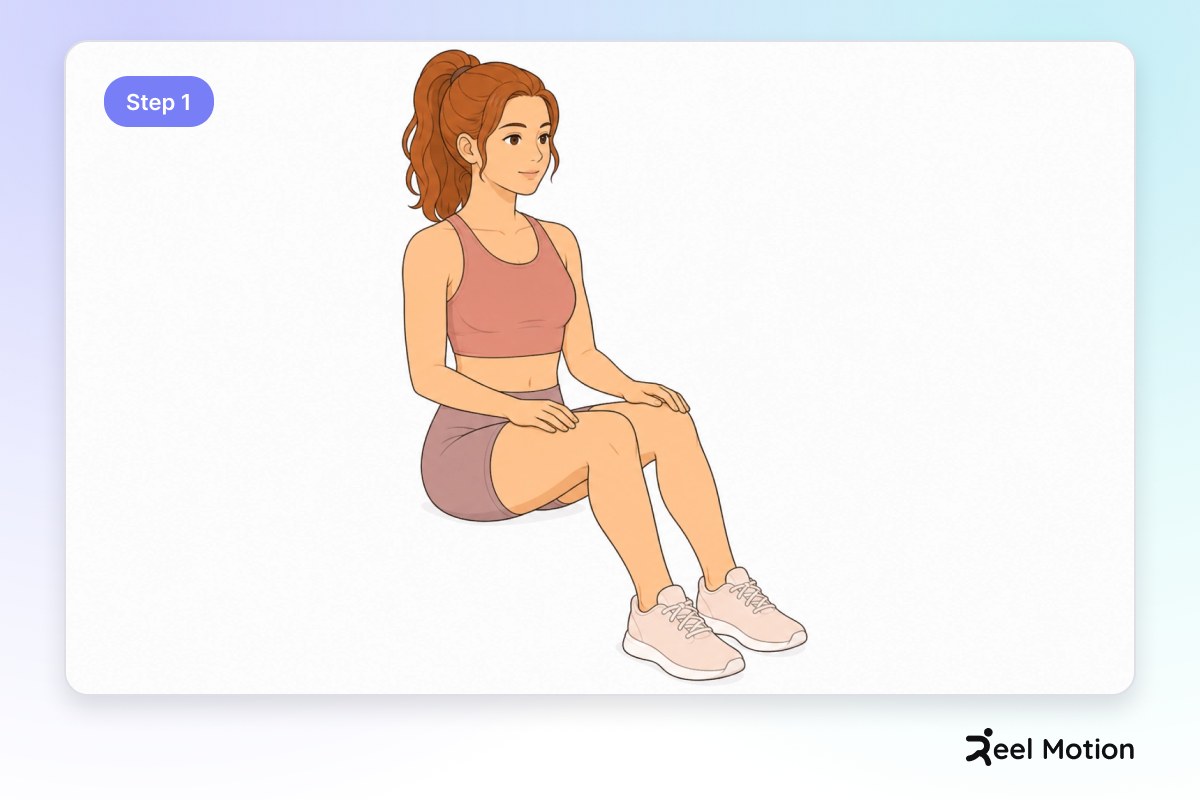
Step 1
Sit with good posture, your back upright, shoulders relaxed, and your gaze forward.
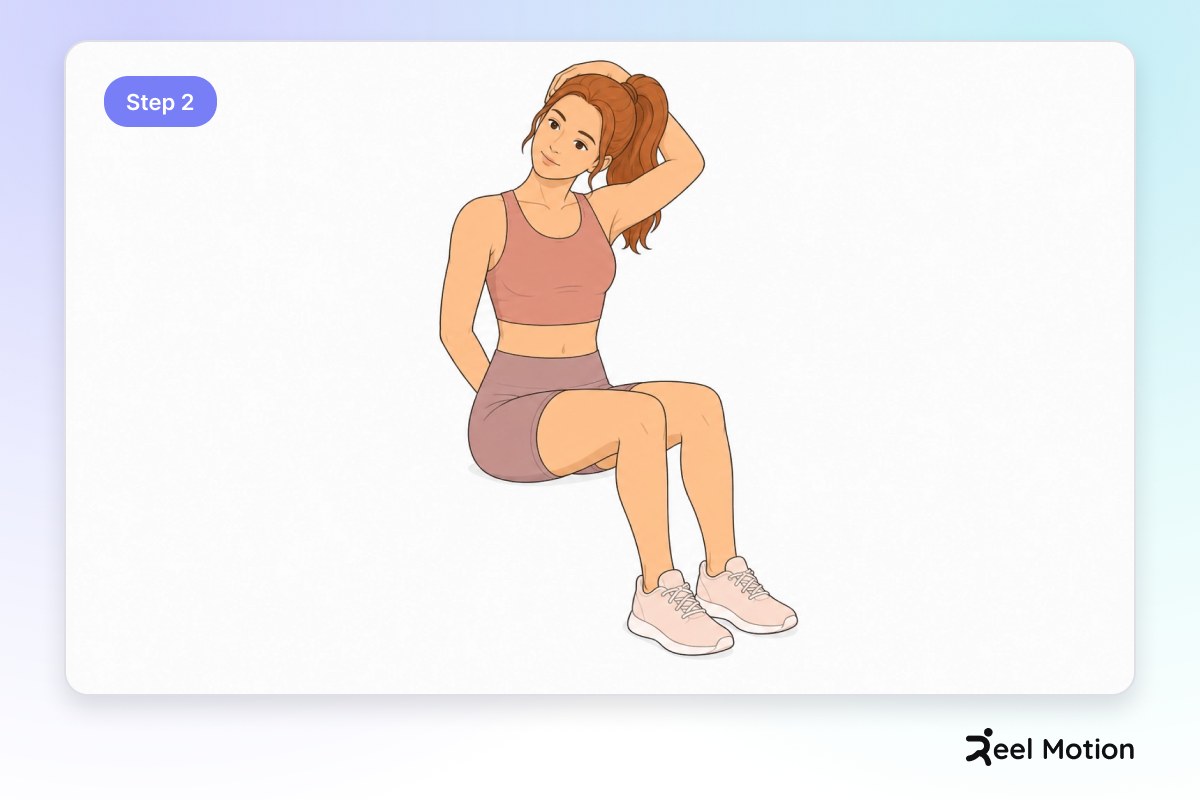
Step 2
Bring your ear toward your shoulder on the same side, place your hand on the opposite side of your head, and apply gentle pressure to deepen the stretch.
Form cues
- Sit tall through your spine
- Relax your shoulders away from your ears
- Keep your gaze forward
- Engage your core lightly
- Move your ear toward your shoulder on the same side
- Place your hand on the opposite side of your head
- Apply gentle, steady pressure to deepen the stretch
- Rotate your head slightly to find tight areas
- Keep your shoulders relaxed and down
Common mistakes
Slouching or rounding your shoulders. Lengthen your spine; imagine a string pulling the crown of your head upward.
Tensing your neck. Drop your shoulders down and back; release any tension.
Forcing your head too far to the side. Move only as far as feels comfortable; gentle stretch, no pain.
Tensing your shoulders toward your ears. Keep your shoulders relaxed; do not shrug.
Applying too much pressure with your hand. Use light pressure only; let the stretch develop naturally.
Holding your breath. Breathe steadily and relax into the stretch.
Breathing
- Breathe naturally and maintain steady breathing.
- Exhale as you apply pressure; continue breathing deeply.
Safety
- Stretch only where comfortable; avoid sharp pain
- Do not force the stretch
Related exercises
More upper body movements in the Reel Motion library:
- Band Assisted Pull-Up — beginner
- Barbell Curl — beginner
- Chin-Up — beginner
- Decline Push-Up — beginner