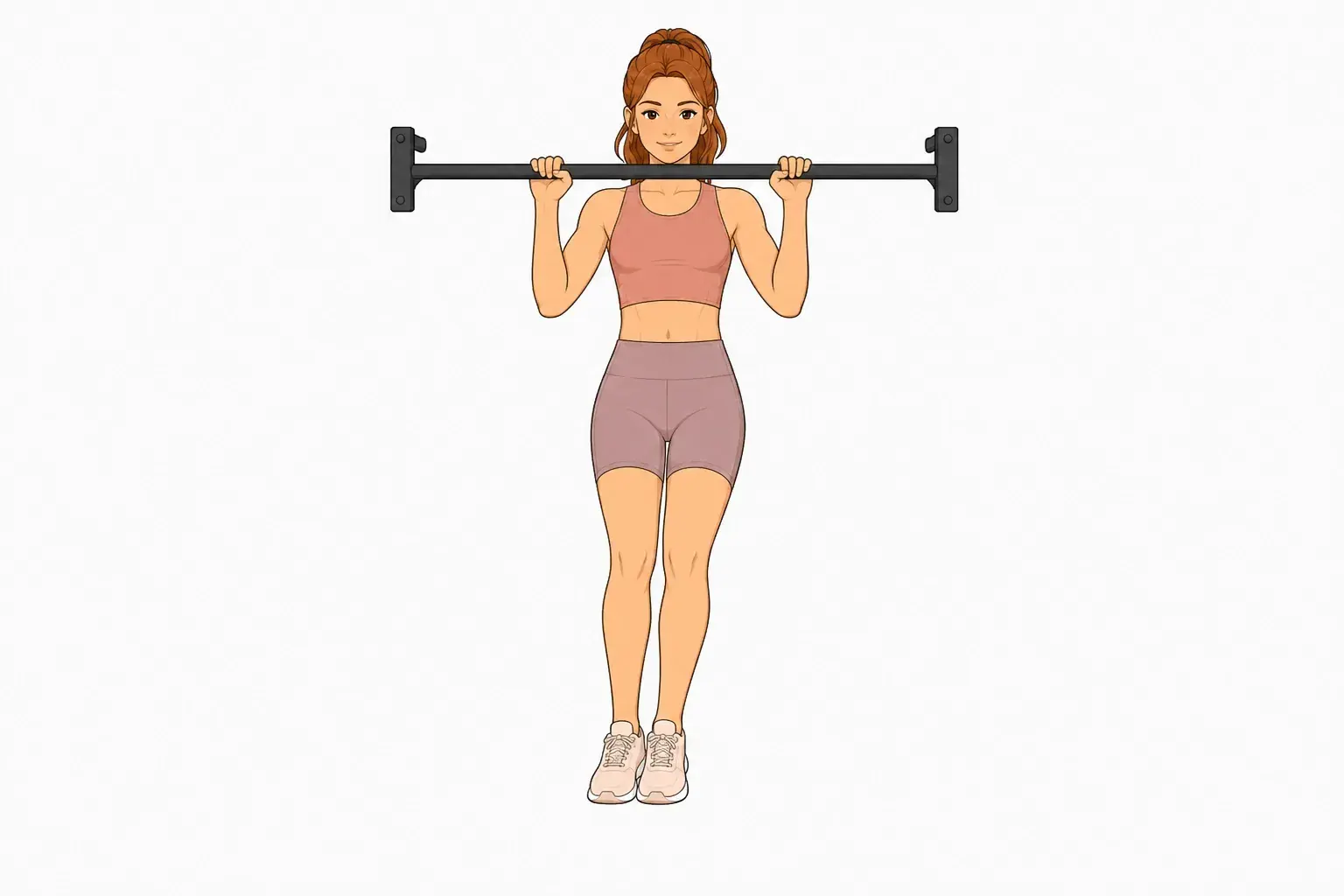

Pull-Up is an intermediate upper body exercise you can do using pull-up bar. Below is the full movement, step by step, with the form cues and common mistakes that matter most.
At a glance
| Body area | Upper body |
|---|---|
| Difficulty | Intermediate |
| Equipment | Pull-up bar |
| Main muscles | Lats, biceps, back and grip |
| Movement pattern | Pull and vertical pull |
| Steps | 3 |
Muscles worked
The work lands mainly on your lats, with your biceps, back and grip taking a share of it. That mix is what makes Pull-Up worth keeping in a rotation rather than doing it once and forgetting it.
The pattern here is pull and vertical pull. Follow it with a pushing movement in the same session and the workout stays balanced.
Pull from lats, not just arms. Keep core engaged in hollow body position. Legs slightly in front if bar is too short. Ribs tucked, glutes tight. Never rush the descent—the negative is the rep. Progress from dead hangs to scapular pulls, negative pull-ups, band-assisted, then full bodyweight reps.
How to do it
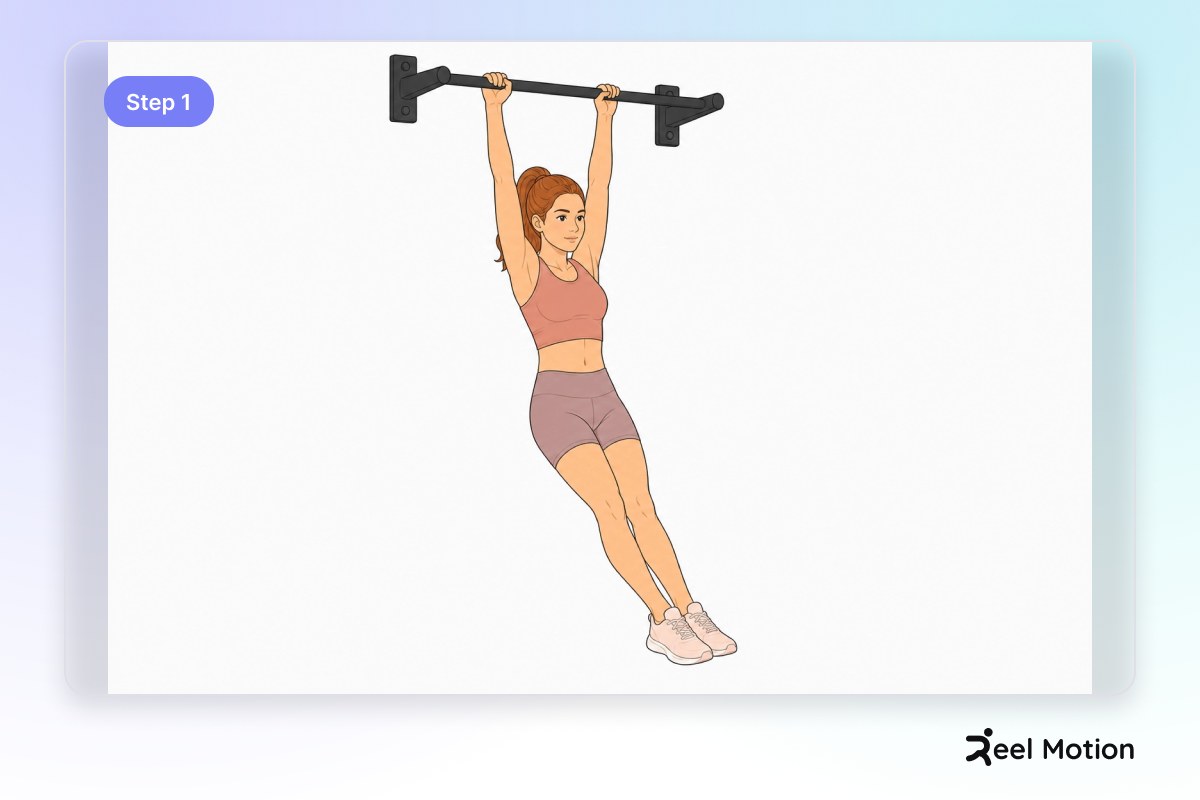
Step 1
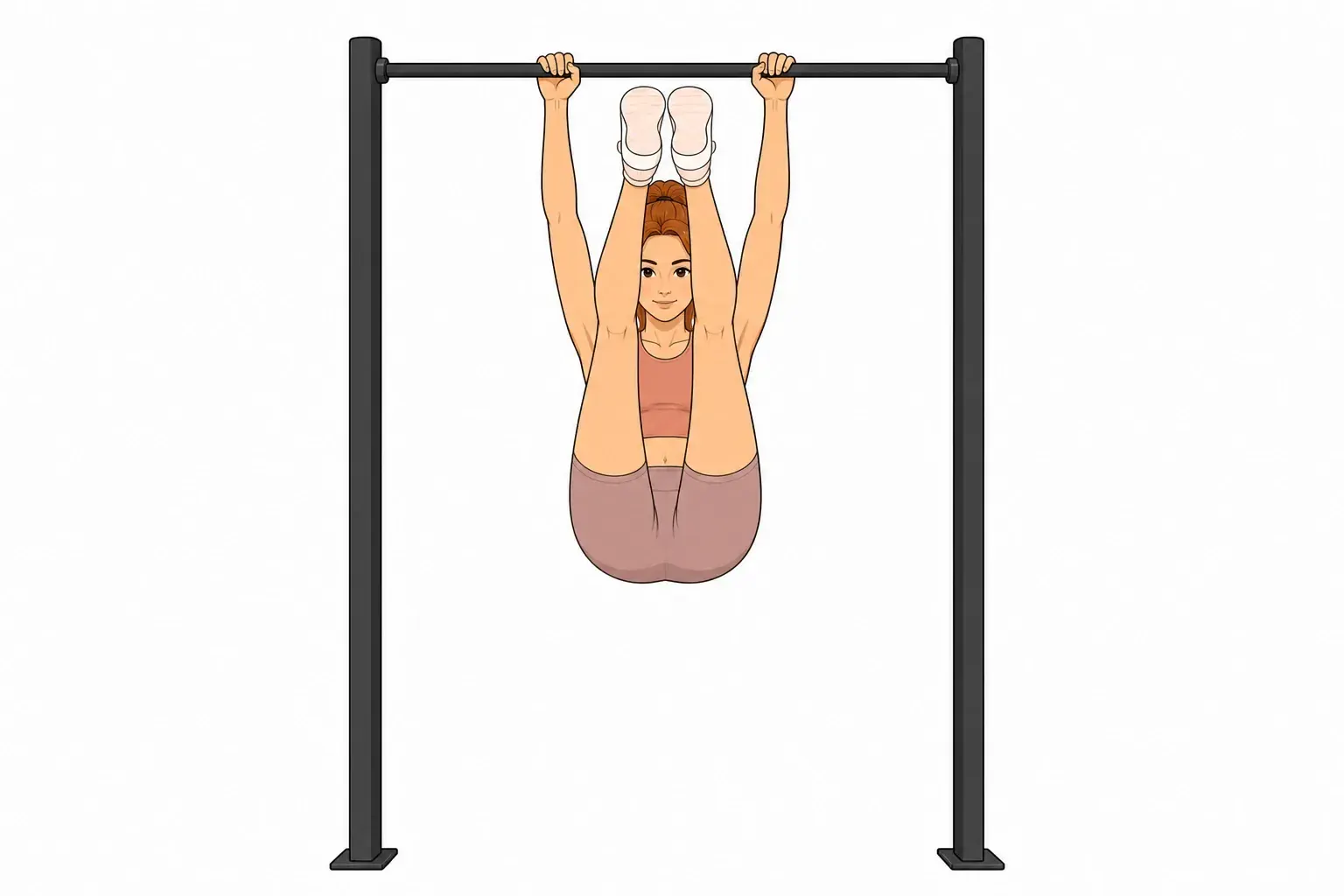
Hang from the bar with arms fully extended, feet slightly in front of your body, and engage your core in a hollow body position with ribs tucked and glutes tight.
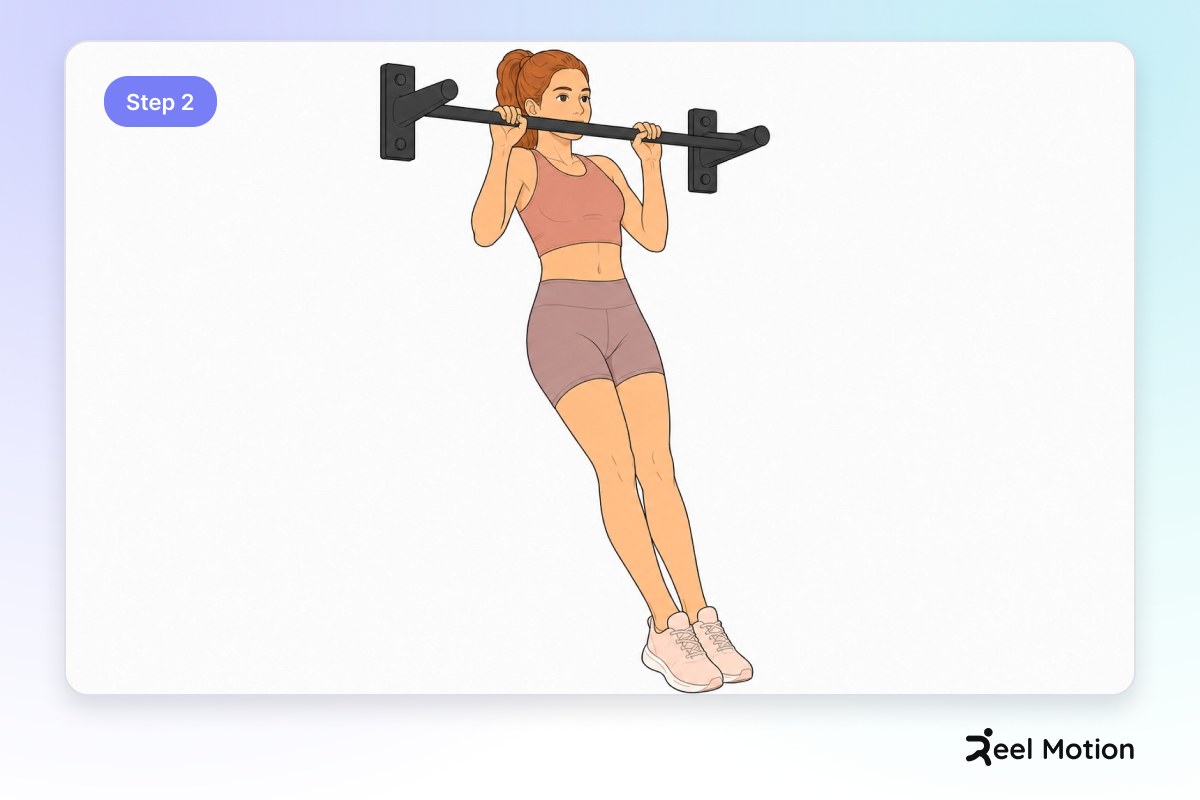
Step 2
Pull yourself up by driving your elbows down and back, leading with your chest and using your lats to initiate the movement, until your chin clears the bar.
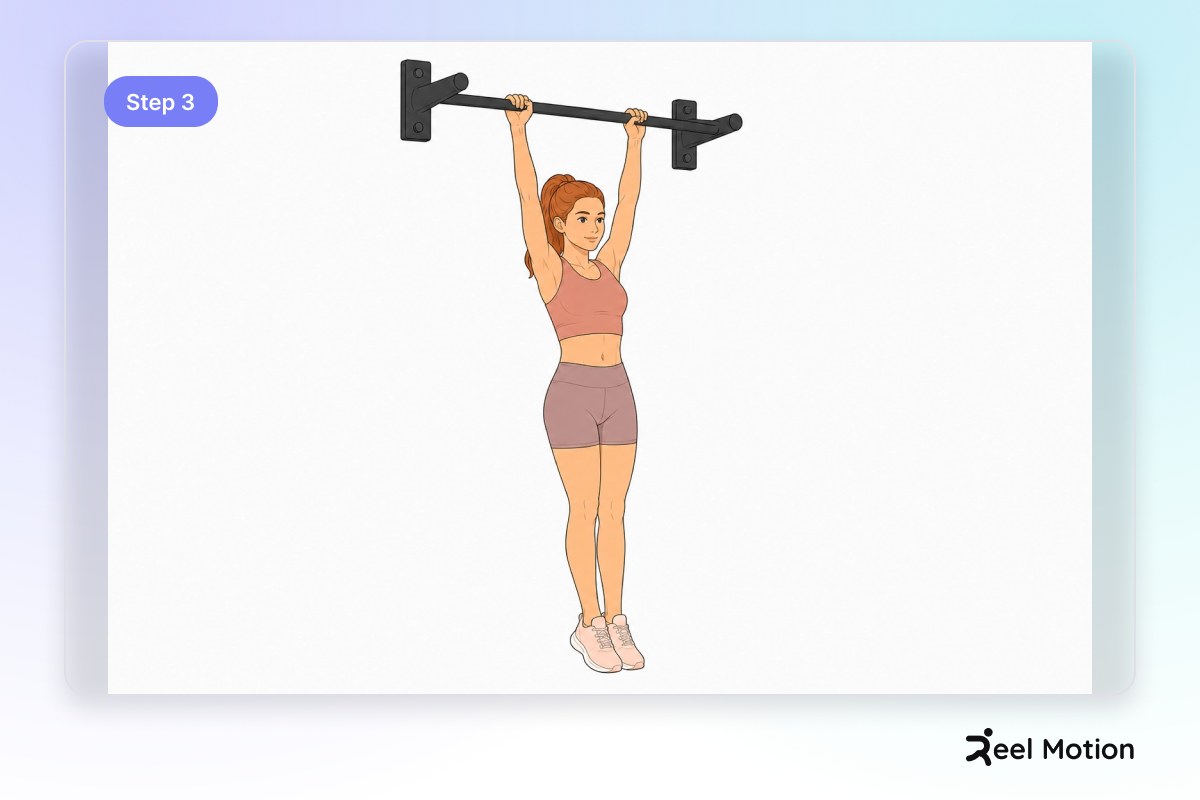
Step 3
Lower yourself with control over 2–3 seconds, keeping your core engaged and lats active, until you return to a full hang with straight arms.
Form cues
- Arms fully extended
- Feet slightly in front of body
- Core engaged in hollow body position
- Ribs tucked
- Glutes tight
- Drive elbows down and back
- Lead with chest, not chin
- Pull from lats, not just arms
- Maintain hollow body position throughout
- Control the descent—do not drop
- Keep core engaged throughout
- Maintain lat tension on the way down
- Return to full arm extension
Common mistakes
Arching lower back. Tuck ribs and tighten glutes to maintain hollow body.
Shoulders shrugged toward ears. Let shoulders relax down and back.
Feet behind body. Position feet slightly forward of your torso.
Pulling with arms only. Focus on driving elbows down and back to engage lats.
Shrugging shoulders to ears. Keep shoulders packed down and back.
Losing core tension. Keep ribs tucked and glutes tight throughout the pull.
Rushing the descent. Take 2–3 seconds to lower; the negative is the rep.
Losing core tension at the bottom. Keep ribs tucked and glutes tight all the way down.
Partial range of motion. Extend arms fully at the bottom before the next rep.
Breathing
- Inhale at the bottom of the hang.
- Exhale as you pull up.
- Inhale as you lower.
How to program it
Reel Motion starts you at 3 sets of 10, with 1 min of rest in between, which comes to about 5 min in total. Change the numbers before you change the technique.
| Sets | 3 |
|---|---|
| Reps per set | 10 |
| Rest between sets | 1 min |
| Total time | about 5 min |
Safety
- Ensure the bar is secure and can support your full bodyweight
- If the bar is too short, position your legs slightly in front to avoid hitting the ground
Where it fits in your training
If Pull-Up is more than you can hold form on right now, build up with Chin-Up first. Once the last set still looks clean, Muscle-Up is the next step up in the same pattern. For a change at the same level, swap in Bodyweight Mid Row.
Related exercises
More upper body movements in the Reel Motion library:
- Inverted Row with Straps — beginner
- Negative Pull-Up — beginner
- V-Bar Pullup — beginner
- Band Assisted Pull-Up — beginner